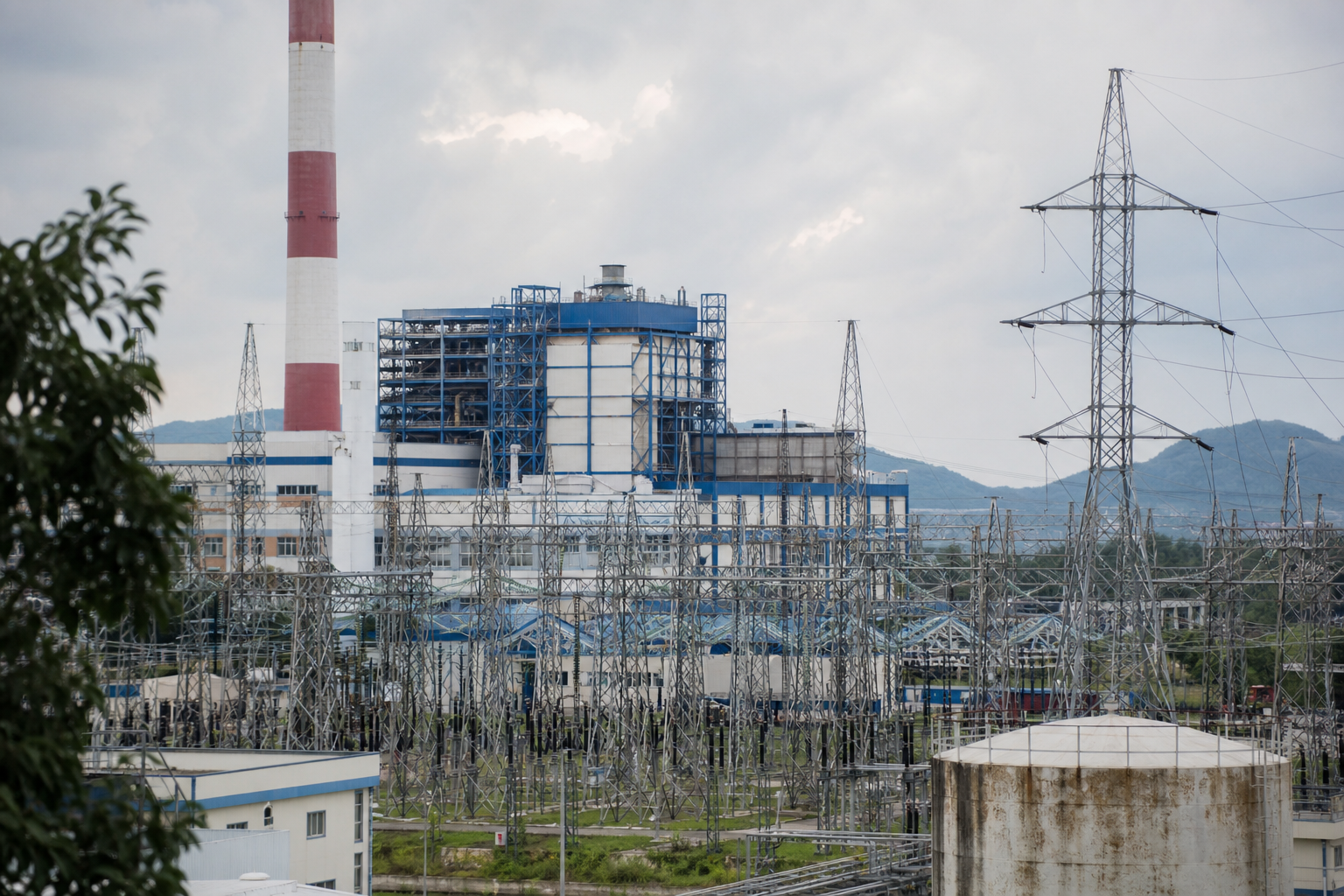
Vietnam's state-owned enterprises delivered a broad earnings recovery in the first half of 2026, with Vietnam Electricity (EVN) announcing it had fully eliminated accumulated losses from 2022–2023 by June 30. Across the SOE sector, revenue growth routinely ran ahead of expectations while profit growth outpaced revenue by wide margins.
EVN Turns the Page on Two Bad Years
EVN reported consolidated revenue of approximately VND 353 trillion in H1 2026, a 14.3% increase year-on-year. The parent company alone recorded VND 296 trillion. EVN did not disclose a specific profit figure, but confirmed operations were profitable and that the group had fully resolved the cumulative losses that built up across 2022 and 2023, restoring capital preservation for the state.
The turnaround had been building since 2025, when EVN's parent entity booked after-tax profit of nearly VND 39.8 trillion — a sharp reversal from the loss-making years driven by high fuel input costs and regulated tariff constraints. Even so, a residual accumulated loss of over VND 5.6 trillion still sat on the books at end-2025. Clearing that overhang by mid-2026 marks a meaningful rehabilitation of the country's largest power utility.
Energy Sector Leads the Profit Surge
The standout performer across the broader SOE landscape was Binh Son Refining and Petrochemical (BSR), which posted after-tax profit of approximately VND 15.7 trillion in H1 2026 — more than 12 times its result in the same period a year earlier, on revenue of VND 104.6 trillion that was itself up 52%. PV GAS, the gas transmission and distribution arm of Petrovietnam, recorded after-tax profit of around VND 8.8 trillion on revenue exceeding VND 81 trillion, consolidating its position as one of the highest-earning entities in the Petrovietnam ecosystem.
The scale of BSR's profit jump reflects a combination of recovered refining margins, higher throughput, and a low base from H1 2025. For PV GAS, rising domestic gas demand tied to industrial expansion and power generation provided volume support.

VEAM's Joint-Venture Model Delivers
VEAM, the state agricultural and industrial machinery group, illustrated how equity income from joint ventures can structurally inflate headline profit figures. The company posted after-tax profit of nearly VND 4 trillion against net revenue of just VND 2.6 trillion — a ratio that only makes sense once joint-venture contributions are factored in. Income from associates and joint ventures reached VND 3.52 trillion, up roughly 15% and accounting for nearly 86% of pre-tax profit. VEAM's stakes in Honda Vietnam, Toyota Vietnam, and Ford Vietnam are the primary drivers of that income stream, making the company's earnings heavily dependent on Vietnam's automotive market rather than its own manufacturing operations.

Chemicals Beat Full-Year Targets at the Halfway Mark
Vinachem, the state chemicals and fertiliser conglomerate, reported estimated H1 profit of over VND 3.2 trillion — a 54% rise that already equals 110% of its full-year 2026 plan. Revenue reached VND 39.6 trillion, up 10.2%. The outperformance was broad-based: Ha Bac Nitrogenous Fertilizer grew profit 15-fold, Ninh Binh Urea tenfold, and a cluster of smaller subsidiaries including Viet Tri Chemicals and Southern Fertilizer each expanded earnings by 37–67%. Fertiliser prices and agricultural demand across the domestic market appear to have shifted decisively in the group's favour.
VNPT and Vinataba Add Breadth
The recovery was not confined to commodities and energy. VNPT, the state telecoms group, grew after-tax profit by over 24% to more than VND 2.9 trillion on revenue of VND 30 trillion, showing that operational efficiency improvements are translating into bottom-line gains at a faster rate than top-line growth. Vinataba, the state tobacco monopoly, reported pre-tax profit up over 60% to VND 1.65 trillion on revenue of VND 17.2 trillion, a margin expansion driven partly by a VND 560 billion increase in gross profit over the period.
What This Means for State Capital Allocation
The breadth of the H1 2026 SOE earnings recovery matters beyond individual balance sheets. Vietnam's government has pressed its major state enterprises to improve capital efficiency and reduce reliance on budget transfers, and these results suggest that policy direction is taking hold — at least cyclically. EVN's elimination of accumulated losses directly restores its ability to invest in grid expansion and renewable integration without first having to offset legacy deficits. For investors watching Vietnam's equitisation pipeline and the secondary performance of listed SOEs such as BSR and PV GAS, earnings momentum at this scale supports the case for continued dividend capacity and reduces the fiscal risk premium that has historically weighed on state enterprise valuations.