A wave of large-scale share repurchase programs swept global markets in mid-2026, with companies across five countries announcing buybacks totaling more than $25 billion within weeks of each other. The breadth of the trend — spanning automakers, telecoms, airlines, banks, and battery manufacturers — points to a broader corporate conviction that equity is undervalued and cash flows are strong enough to return capital to shareholders at scale.
The Numbers Behind the Wave
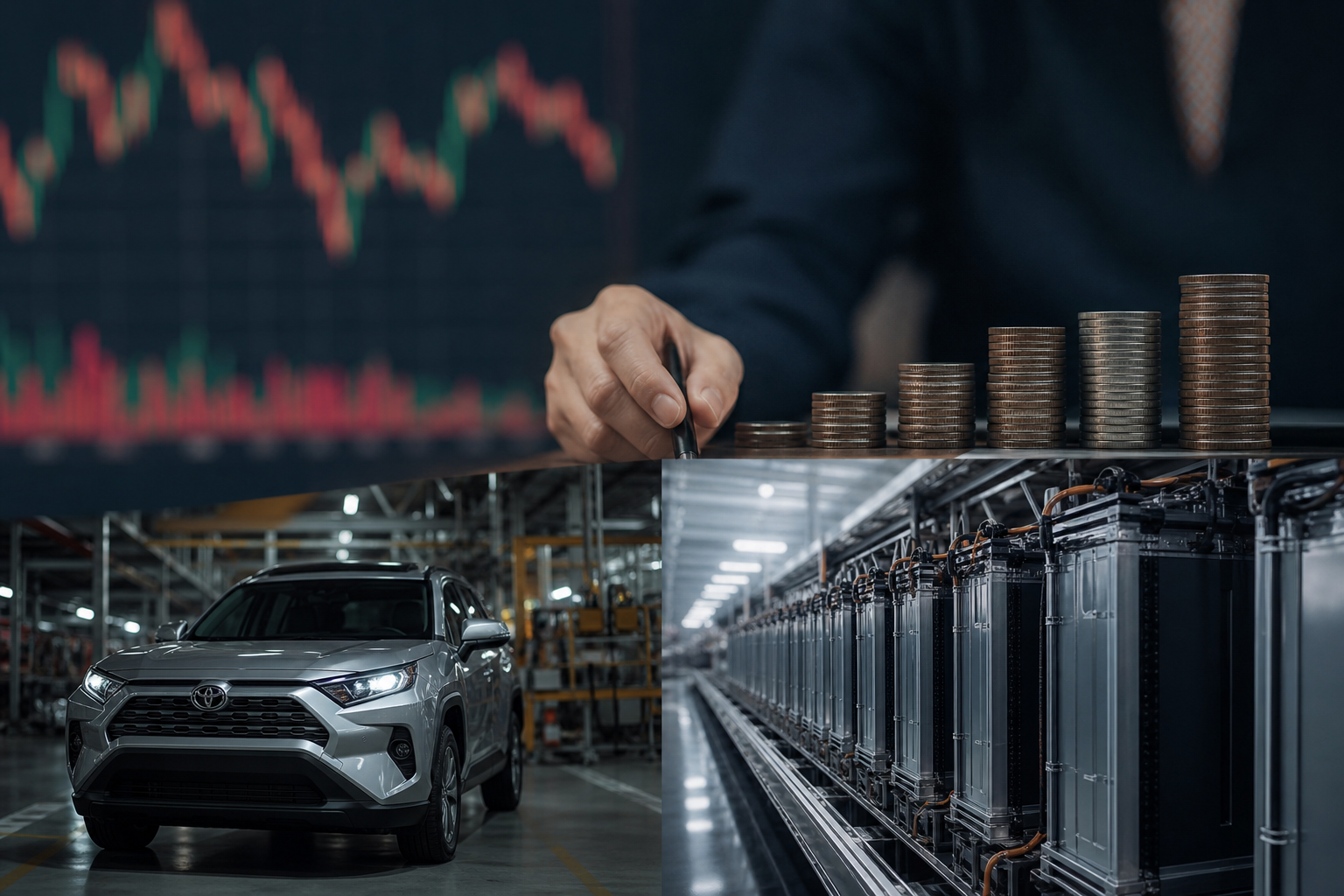
The headline figures are striking. Toyota announced a ¥1 trillion ($6.3 billion) buyback alongside a raised profit outlook, citing solid US and Japan sales driven partly by yen weakness. CATL, the world's dominant electric-vehicle battery maker, unveiled a repurchase program of up to $5.6 billion after posting strong first-half results, sending its shares higher. Airbus added a €5 billion buyback to a three-year plan that also targets doubling profits and ramping production. Together, these three programs alone account for the bulk of the total.
Telecoms and Banks Join In
The repurchase impulse is not confined to industrials. Australia's Telstra announced a new A$1 billion ($706 million) buyback after completing a A$1.25 billion program in June, framing the move as an extension of a sustained capital-return strategy following a modest profit rise. Commerzbank, still navigating pressure from UniCredit's potential takeover bid, unveiled a €1.2 billion buyback as its chief executive sought to demonstrate that the bank's standalone strategy can deliver competitive returns. Daimler Truck is set to launch a second €1.1 billion buyback tranche by mid-September, signaling consistent cash generation from commercial vehicle operations.

Hertz: A Cautionary Contrast
Not every buyback story is one of corporate strength. Hertz presents a sobering counterpoint. The car-rental company spent roughly $5 billion on share repurchases in prior years, a decision that left it cash-strapped when its fleet strategy misfired. A better second quarter in 2026 now offers a possible path out of that crunch, but the episode serves as a reminder that buybacks funded by leverage or executed at cycle peaks can destroy rather than create value. The contrast with Toyota or CATL — both buying back stock from positions of operational strength — is instructive.

What Drives the Timing
Several macro forces converged to make mid-2026 fertile ground for repurchases. Equity valuations in several sectors had underperformed earnings growth, creating a mechanical case for buybacks as the highest-return use of cash. Currency dynamics played a role for Japanese exporters: Toyota explicitly cited yen weakness as a tailwind to the profits now being recycled into repurchases. For European firms like Airbus and Commerzbank, the buybacks also carry a defensive valuation signal — a message to the market that management sees the stock as cheap at current prices. CATL's move reflects a different logic: using a period of strong EV-sector demand to consolidate shareholder confidence amid intensifying competition from Chinese and Western rivals.

Capital Allocation or Missed Investment?
The scale of these programs inevitably invites scrutiny. Critics of large buybacks argue that capital returned to shareholders in periods of technological transition — EV adoption, AI-driven logistics, decarbonization of aviation — represents a missed opportunity to accelerate R&D or capacity investment. Airbus partially addresses this tension by pairing its €5 billion buyback with explicit output-growth and profit-doubling targets, suggesting the two goals are not mutually exclusive. CATL's strong H1 results imply it is funding buybacks from surplus cash rather than diverting investment budgets. For Telstra, operating in a mature telecoms market with limited high-return reinvestment options, the buyback case is straightforwardly rational.
Investor Takeaway
For global equity investors, the buyback wave carries several signals worth parsing. First, management teams across diverse sectors are signaling confidence in near-term earnings durability even amid trade-policy uncertainty. Second, the gap between operational strength (Toyota, CATL, Telstra) and financial-engineering risk (Hertz) is wide — execution context matters as much as headline size. Third, for investors tracking capital flows into Asia-Pacific manufacturing and EV supply chains, CATL's $5.6 billion program reflects the pricing power and cash conversion that come with dominant market share, a dynamic with direct read-through to suppliers and battery-material producers across the Mekong and broader Southeast Asian region. Repurchase announcements are not uniformly bullish; they are corporate Rorschach tests that reward close reading of the balance sheet behind the headline.