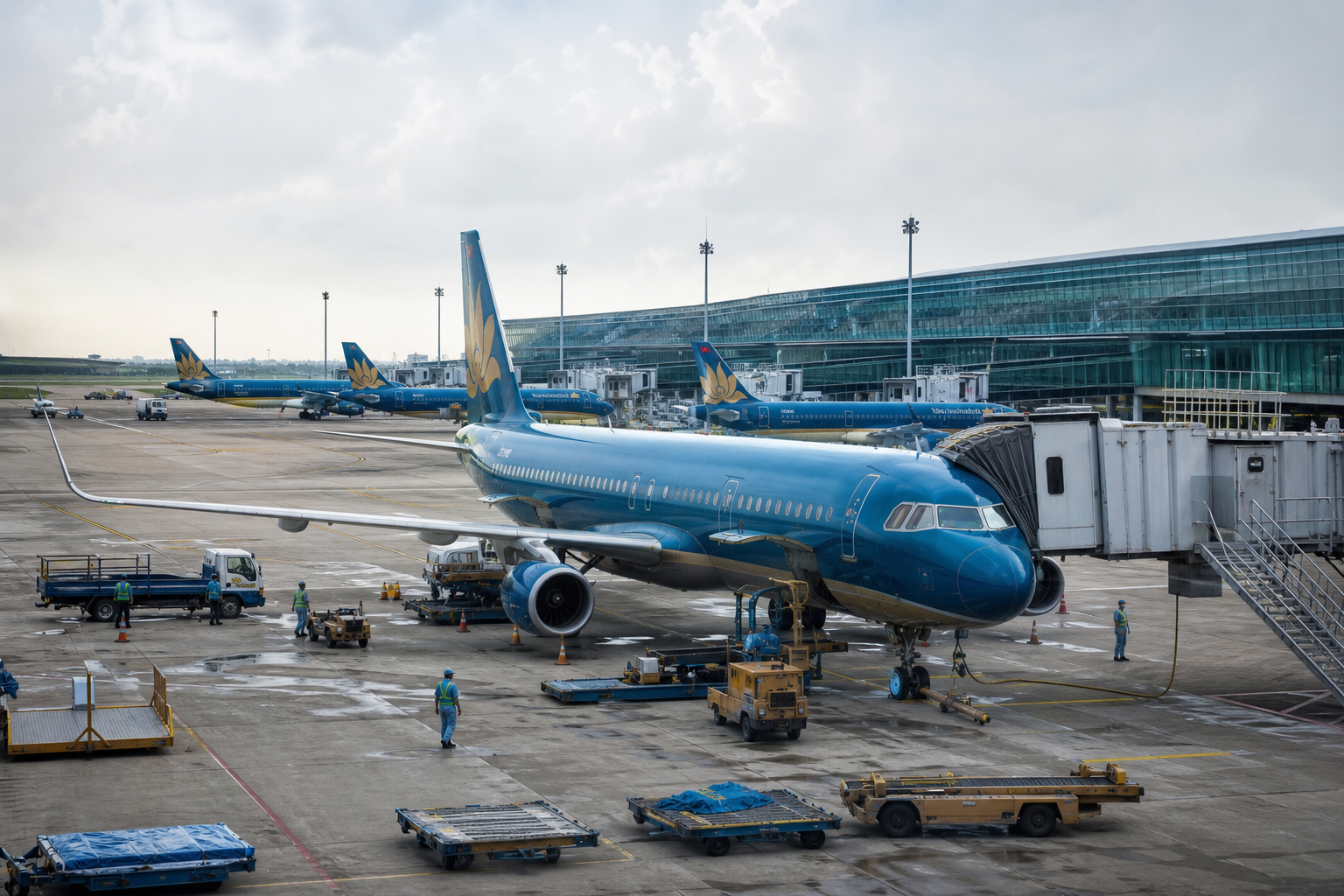
Vietnam's aviation sector faces a significant consumer protection overhaul starting July 1, when airlines will be required to pay passengers up to $165 in non-refundable compensation for long-haul international flights that are delayed or cancelled — a structured ruleset that raises the bar for carriers operating in one of Southeast Asia's fastest-growing air travel markets.
New Rules, Clear Numbers
Circular 48, issued by the Ministry of Construction to guide Decree 208/2026, sets binding compensation tiers based on route distance. For international flights, delays of four hours or more trigger payouts of $28 for routes under 1,000 km, $55 for 1,000–2,500 km, $88 for 2,500–5,000 km, and $165 for routes exceeding 5,000 km. Domestic routes follow a parallel VND-denominated scale: VND 220,000 for flights under 500 km, rising to VND 440,000 for routes of 1,000 km or more.
Refund Timelines Tightened
Beyond the compensation amounts, the circular also closes a longstanding grey zone around ticket refunds. When a flight is cancelled or delayed by four or more hours due to airline fault, carriers must refund the full unused ticket value if passengers decline rebooking. Deadlines vary by payment method: cash or bank transfer refunds must clear within 21 days, vouchers within 14 days, and credit card refunds within 45 days. Refunds processed through travel agents carry a 30-day airline deadline, after which agents have a further 25 days to pass funds to the passenger.
Passenger Claim Windows
The regulation defines strict deadlines for passengers as well. Refund requests must be submitted within 60 days of the originally scheduled departure or the actual date of a delayed flight. Compensation claims carry a 90-day window from the relevant flight date. Once a valid claim is received, airlines must complete payment within 21 days or issue a written rejection with stated reasons — a transparency requirement that directly addresses the vague, drawn-out responses passengers have historically encountered.
Payment Flexibility, With Limits
Airlines may pay compensation in cash, bank transfer, electronic payment, frequent-flyer points, free tickets, vouchers, or other agreed forms. However, the circular explicitly bars carriers from attaching unreasonable conditions to non-cash instruments — a provision targeting the common practice of issuing vouchers with narrow validity windows or restricted routes. The cash-equivalent value must match the mandated compensation amount regardless of the payment form chosen.
Accountability Mechanisms
Carriers are required to build formal complaint-handling procedures and publish them on their websites. Written responses to compensation disputes must be issued within seven days of receipt. Airlines must also submit periodic reports to regulators on all cases of delay, cancellation, and denied boarding — creating a documented record that could feed future enforcement and policy adjustments. These reporting obligations put Vietnam's framework closer to consumer protection standards seen in the European Union's EC 261/2004 regulation, though Vietnam's payout ceilings remain considerably lower.

What This Means for Travelers and Carriers
For the millions of passengers flying Vietnam's busy domestic trunk routes — Hanoi to Ho Chi Minh City being the region's second-busiest air corridor — and growing international connections across Asia and beyond, the new rules represent a meaningful shift in accountability. Airlines including Vietnam Airlines, VietJet Air, and Bamboo Airways will need to upgrade their customer service infrastructure and build financial reserves to cover claims at scale. Investors tracking Vietnam's aviation and tourism sectors should watch whether enforcement keeps pace with the regulation's ambitions; past consumer protection rules in the country have sometimes lacked the follow-through that gives them real teeth.