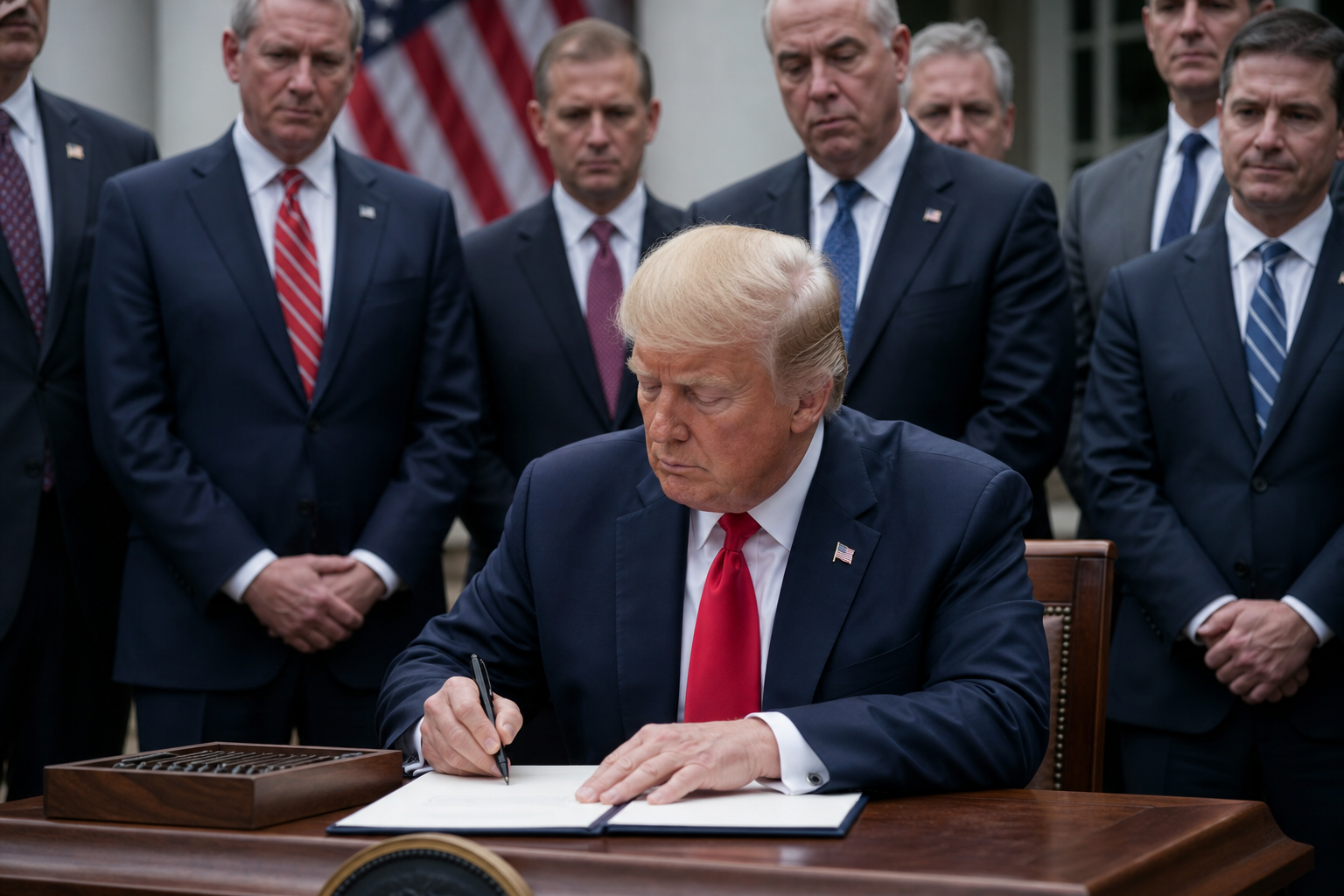
The United States will impose 50% import tariffs on a broad range of Canadian goods starting August 19, after President Donald Trump signed three tariff documents on July 20 under Section 338 of the Tariff Act of 1930. The move marks a sharp escalation in trade tensions between the two neighbors, overriding protections normally granted under the US-Mexico-Canada Agreement.
A Depression-Era Law Gets Dusted Off
Section 338 of the Tariff Act of 1930 — a statute rarely used in modern trade policy — allows Washington to impose duties of up to 50% on imports from any country deemed to be discriminating against American goods. By invoking this authority, the Trump administration bypassed the standard USMCA framework that has governed North American trade since 2020. The new tariffs apply regardless of whether individual products would otherwise qualify for preferential treatment under that agreement, according to the White House announcement.
Which Products Are Targeted
The product list is deliberately eclectic, spanning wine, hockey sticks, cement, dairy preparations, swimming pools, furniture, fishing rods, seeds, clothing, and wigs. The breadth signals that Washington is targeting consumer and industrial goods rather than a single sector. Notably, energy products, potash, seafood, critical minerals, and goods already subject to Section 232 national-security tariffs are exempt from this new round.
Canada's Retaliation Drew the Response
US Trade Representative Jamieson Greer framed the tariffs as a direct answer to Canadian counter-measures, stating that unlike other trading partners, "Ottawa vẫn trả đũa Washington" — Ottawa continues to retaliate against Washington's efforts to rebalance trade. The White House cited Canada's supply-managed dairy system, provincial liquor-board bans on American alcohol, and import quotas applied specifically to American automobiles as the principal grievances driving the decision.

The Numbers Behind the Dispute
The data Washington presented underscores how quickly the bilateral trade relationship has deteriorated. US car imports into Canada fell 22% over the past year, while American alcohol sales into the country collapsed by 81% after most Canadian provinces halted purchases of US spirits and wine in retaliation for earlier tariff rounds. These figures gave the administration concrete metrics to justify the escalation under domestic law.

USMCA's Limits Exposed
The decision to apply tariffs irrespective of USMCA eligibility is the most legally significant aspect of the announcement. The 2020 agreement was designed to provide a stable, rules-based framework for North American trade and was itself a renegotiation of NAFTA. Invoking a 1930 statute to override it suggests the current administration views USMCA as a floor rather than a ceiling on tariff authority — a precedent that will be watched closely by trade lawyers and exporters across the region.
Broader Trade War Context
The announcement came days after Trump threatened to add the "incalculable costs" of wildfire smoke drifting across the border from Canada into the United States to existing tariff levels — blending environmental grievance with trade policy in an unusual combination. For exporters in Asia who compete with or supply North American supply chains, the continued erosion of rules-based trade norms between the US and one of its closest allies adds another layer of uncertainty to global sourcing decisions.
The August 19 effective date gives Canadian exporters and US importers less than a month to adjust contracts, redirect inventory, or absorb the cost increase. Whether Ottawa responds with a fresh round of counter-tariffs or seeks a negotiated carve-out will likely determine whether this episode stabilizes or spirals into a deeper bilateral rupture.