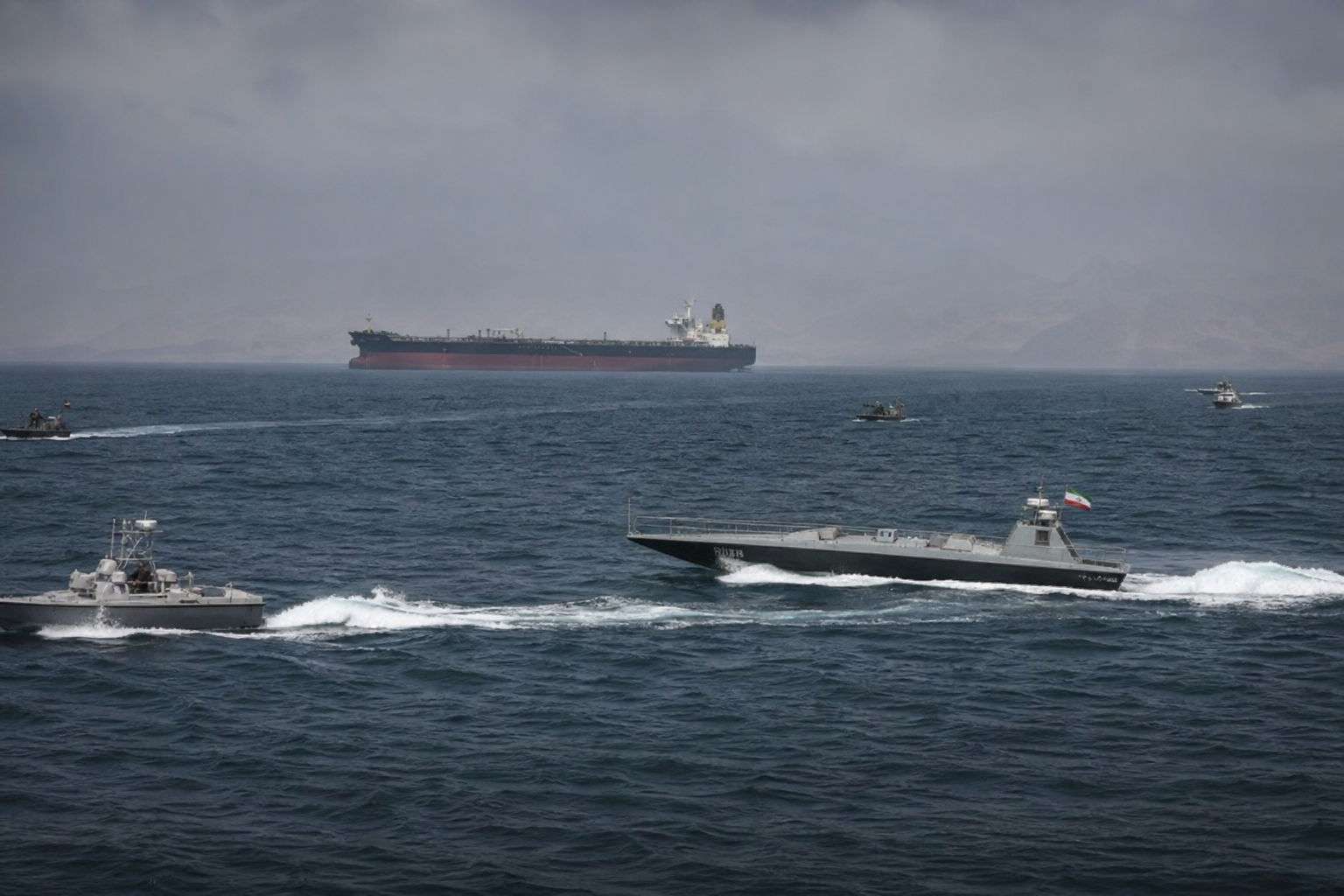
Iran's Islamic Revolutionary Guard Corps (IRGC) declared the Strait of Hormuz closed to all shipping on July 12, citing what it called unlawful interference by outside forces. The announcement came after Iranian naval forces fired a cruise missile at a commercial vessel and ordered it to stop, marking a sharp new escalation in the standoff between Tehran and Washington.
The Closure Declaration
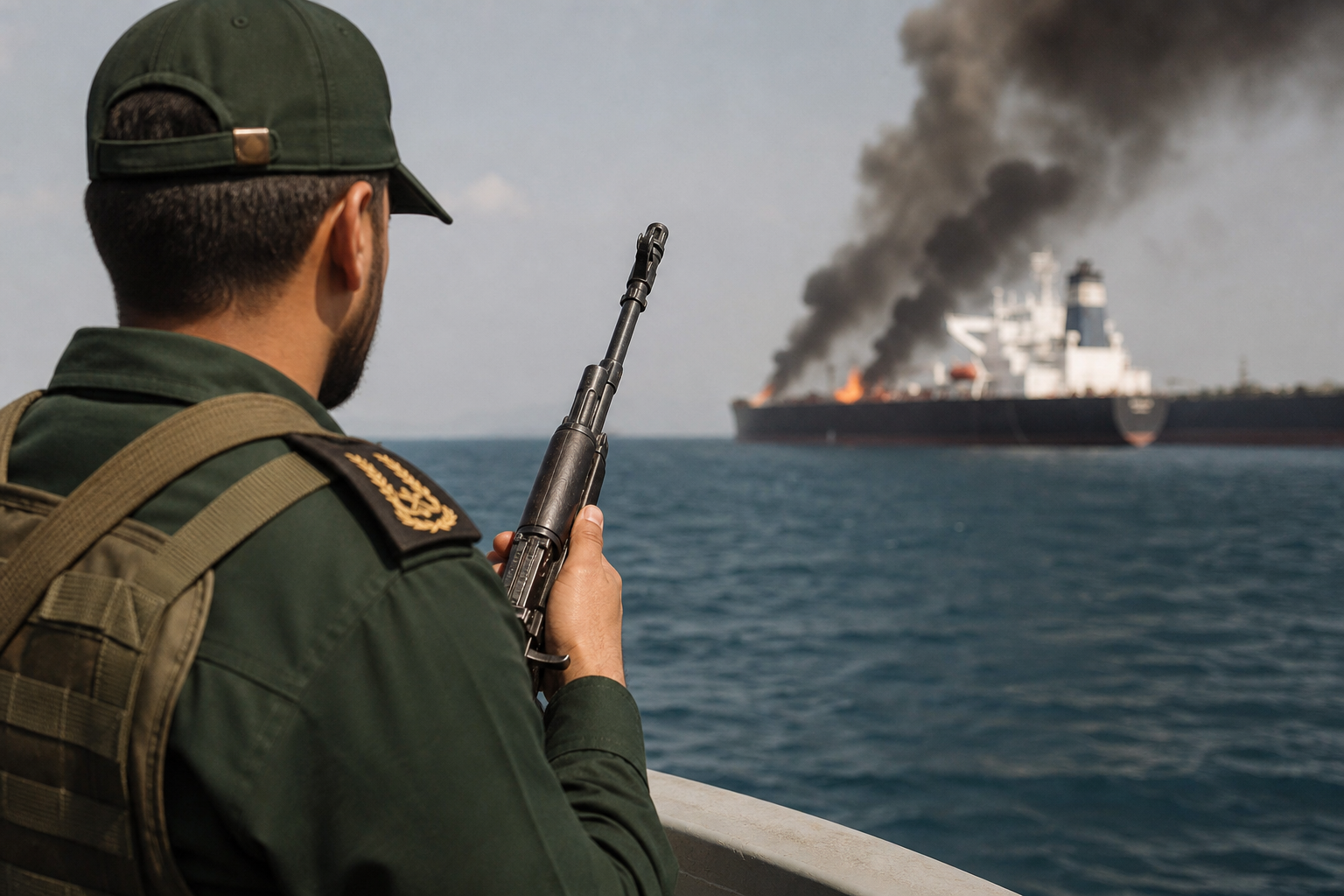
The IRGC's naval command announced via Iran's state broadcaster IRIB that the strait would remain closed "until further notice" and until the United States ends what Iran describes as regional interference. All civilian and military vessels were barred from transiting the waterway. Iranian forces accused some ships of ignoring navigation warnings and switching off identification systems — a move Tehran characterized as a direct threat to maritime security.
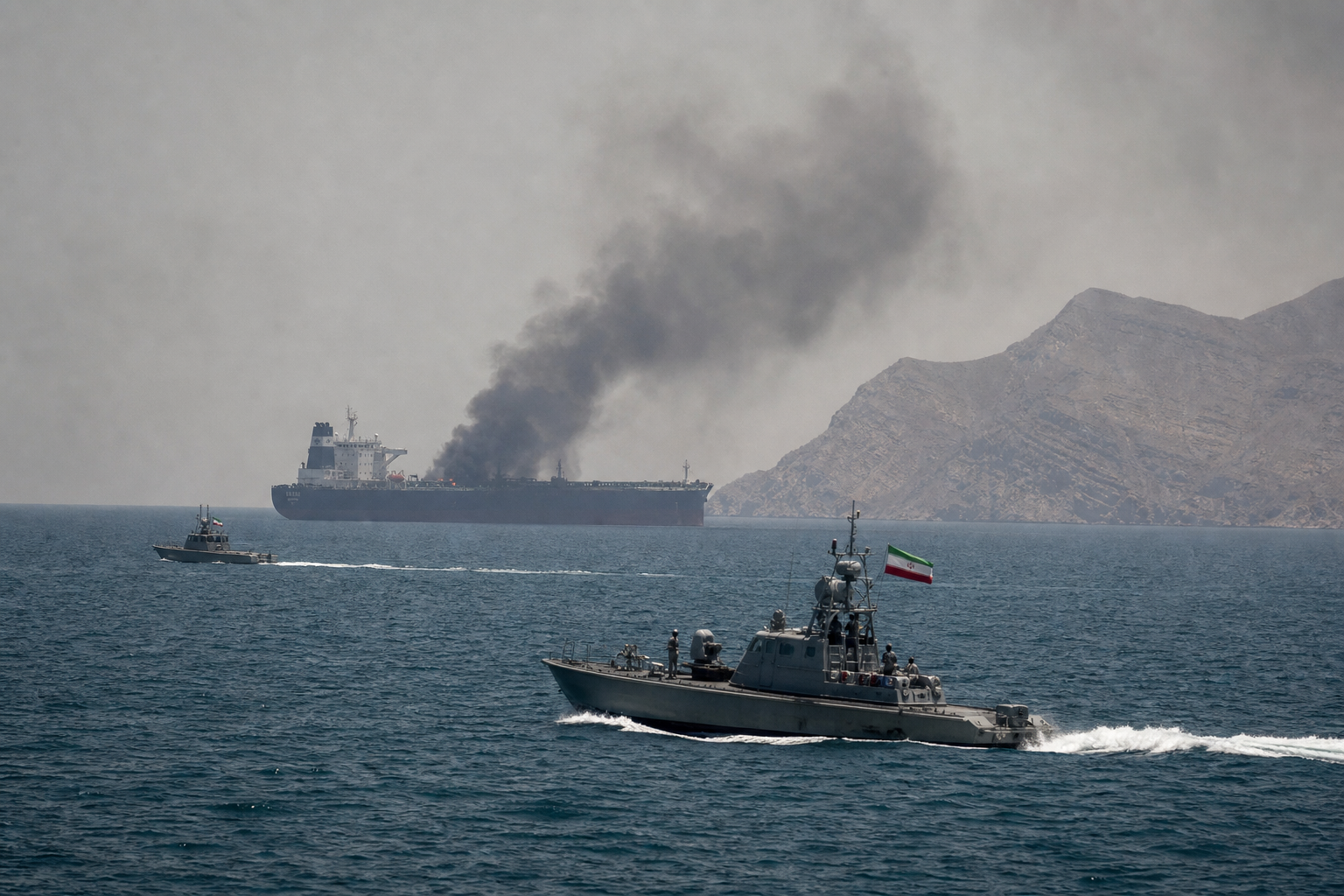
The immediate trigger was an incident involving a vessel that allegedly disabled its transponder and "endangered maritime safety," according to the Iranian news agency Fars. After repeated warnings went unheeded, IRGC naval forces fired on the ship, forcing it to halt. The episode set off a rapid chain of military responses from Washington.
US Counterstrike and the GFS Galaxy Incident
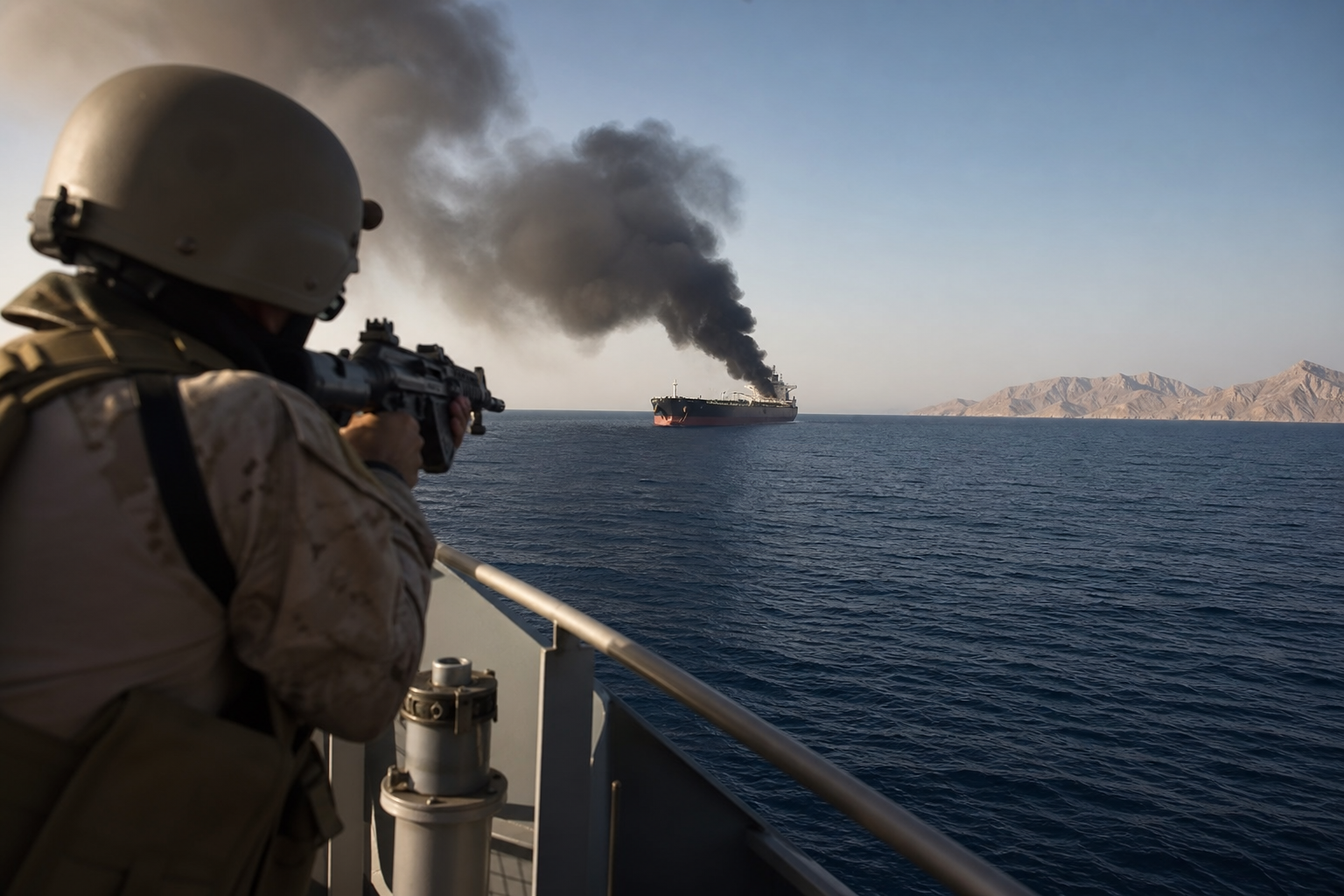
US Central Command (CENTCOM) confirmed that the IRGC had attacked the Cyprus-flagged cargo ship GFS Galaxy as it transited the strait, leaving the vessel with severe engine damage and one crew member missing. CENTCOM launched its third airstrike of the week against Iranian targets in retaliation, stating the strikes were aimed at degrading Iran's capacity to attack commercial ships and their crews.
President Donald Trump confirmed the strikes were carried out under his direction. He had declared the ceasefire formally over on July 10, though he left open the possibility of continued diplomatic dialogue between Washington and Tehran.
A Ceasefire Agreement Unraveling
The current crisis traces back to a 14-point memorandum of understanding signed between the US and Iran in mid-June. Article 5 of that agreement committed Iran to facilitating safe, free passage for commercial vessels through the Persian Gulf–Sea of Oman corridor for 60 days. Iran was also to coordinate with Oman and Persian Gulf states to develop a maritime management framework for Hormuz under international law.
However, the memorandum left key implementation details undefined, and the two sides quickly developed incompatible interpretations. Iran concluded it held primary authority over coordinating all shipping through the strait. The United States interpreted Article 5 as a straightforward guarantee of freedom of navigation.
The fracture became visible on June 25 when the cargo ship Ever Lovely was attacked near the Omani coast. The US blamed Iran, struck Iranian coastal targets the following day, and Iran retaliated against US military positions in the region. That tit-for-tat cycle repeated itself multiple times, progressively hollowing out the ceasefire.
The Southern Route Dispute
A specific flashpoint has been the US effort, coordinated with Oman and the International Maritime Organization (IMO), to establish an alternative shipping lane running entirely through Omani territorial waters along the southern edge of the strait. Washington and its partners have encouraged commercial operators to use this southern route rather than the northern lane that passes through Iranian territorial waters.
Iran views this arrangement as an attempt to bypass its authority entirely. Tehran's ambassador to the United Nations, Amir Saeid Iravani, accused the US of violating the June memorandum by continuing large-scale military operations against Iranian sovereignty. He warned that Tehran would no longer consider itself bound by the agreement if Washington persisted.
Energy and Commodity Market Implications
The Strait of Hormuz is the single most important oil transit chokepoint in the world, carrying roughly 20 percent of global petroleum trade at peak flow. A sustained closure — or even prolonged uncertainty over passage rights — immediately translates into higher freight insurance premiums, spot oil price volatility, and shipping delays affecting Asian importers, including South Korea, Japan, China, and India.
Vietnam imports the overwhelming majority of its refined petroleum from Northeast Asian refiners who source crude from the Gulf. Any sustained disruption to Hormuz traffic puts upward pressure on domestic fuel costs in Vietnam and across the broader Mekong region, feeding through into transport, manufacturing, and agricultural input prices at a time when regional economies are already managing US tariff pressures.
What Investors Should Watch
The practical question for commodity and energy traders is whether the closure holds beyond a day or two, or whether back-channel negotiations produce a rapid de-escalation as has happened in previous Iran-US standoffs. The southern Omani route represents a partial workaround but adds distance and cost, particularly for very large crude carriers. Any sustained enforcement of the closure by the IRGC — including further strikes on commercial vessels — would rapidly translate into $5–10 per barrel oil price spikes based on historical precedent from 2019 tanker incidents.
For investors with exposure to Vietnamese and Southeast Asian energy-intensive sectors — petrochemicals, logistics, plastics, fertilizers — monitoring the pace of US-Iran talks and CENTCOM operational tempo over the next 72 hours will be the clearest leading indicator of whether this escalation is a pressure tactic or the beginning of a protracted closure.