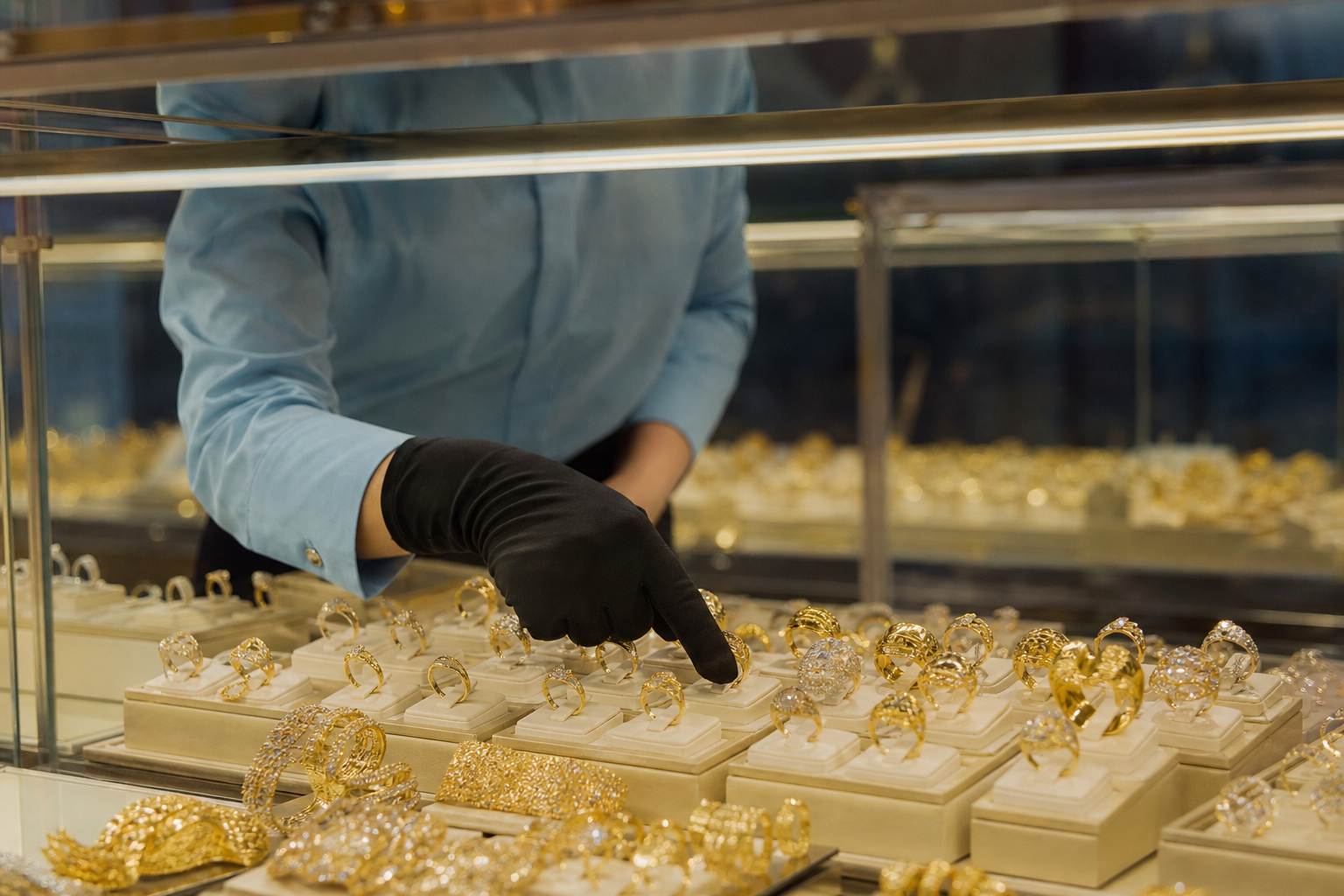
Vietnam's largest listed jewelry retailer, Phú Nhuận Jewelry (PNJ), recorded operating cash flow of more than 3,500 billion VND in Q1 2026, a dramatic swing from a negative 230 billion VND in the same period a year earlier. The reversal looks impressive on the surface, but a closer reading of the cash flow statement tells a more nuanced story.
Inventory, Not Profit, Drove the Turnaround
The headline cash figure did not emerge from a step-change in profitability. As PNJ's consolidated Q1 financial report shows, the dominant contributor was a reduction in working capital — specifically, inventories shrank by more than 2,420 billion VND during the quarter. A further 50 billion VND came from a reduction in trade receivables. Together, these working-capital movements account for the overwhelming bulk of the apparent cash generation.
This is a meaningful distinction for analysts. Releasing cash from stockpiles is a one-time, cyclical event, not a structural improvement. If PNJ needs to restock — or if sell-through slows — the same mechanism that produced the Q1 bounce will go into reverse.
A Balance Sheet Still Heavy with Goods
Even after the drawdown, PNJ held more than 13,460 billion VND in inventory as of 31 March 2026, down roughly 15% from year-end 2025 but still the single largest asset on the balance sheet. The company's filing shows that this stockpile represents a substantial capital commitment, one that dwarfs the 923 billion VND in cash and cash equivalents held at quarter-end.
The sheer scale of the inventory position means PNJ's working-capital cycle remains a key variable for investors watching free cash flow generation through the rest of 2026.

Where the Cash Went
Rather than sitting on the freed-up liquidity, PNJ redeployed it into short-term financial investments. The company spent more than 2,990 billion VND on loans and debt instruments, while recovering around 1,470 billion VND from maturing positions — leaving investing cash flow negative by nearly 1,490 billion VND for the quarter.
By 31 March, short-term financial investments stood at 3,586 billion VND, of which 3,487 billion VND consisted of time deposits at commercial banks. This means PNJ's liquid assets are largely parked in term deposits rather than freely available cash. Should the company face an urgent capital need, meeting it would depend on those deposits maturing or on early redemption of the instruments — a modest but real liquidity constraint.
The Diamond Controversy Arrives After the Data Cut-Off
The Q1 snapshot carries an important caveat: it was filed as of 31 March 2026, before a policy dispute over PNJ's diamond buyback practices became public in July. According to a letter PNJ released on 21 July, the company experienced a sudden spike in customers seeking to resell jewelry amid market turbulence. PNJ responded by introducing a temporary liquidity-management arrangement, spreading buyback payments across four monthly instalments — a measure applied not only to diamonds but to gold and silver products as well.
The Q1 numbers therefore say nothing about the cash-flow impact of this buyback surge. If the volume of customer resales remains elevated through Q2 and Q3, PNJ could face meaningful outflows from repurchase obligations at precisely the moment it has already drawn down inventory and redeployed cash into term deposits.

Reading the Signals
The gap between reported operating cash flow and the underlying drivers matters for how investors should model PNJ's forward trajectory. The 3,500 billion VND figure reflects a favorable working-capital unwind — cash that was previously locked in metal and stones becoming liquid again. It does not signal a step-up in the business's earnings power.
Three variables will determine whether this position holds through 2026: the pace of inventory restocking as PNJ refreshes its product mix, the scale of buyback outflows triggered by the diamond controversy, and the timing of term-deposit maturities relative to those cash demands. The Q1 report is a useful baseline, but it describes a company that looked financially comfortable before a new set of pressures materialized.
Investor takeaway: PNJ's cash flow reversal is real but largely mechanical. Investors should weight Q2 and Q3 disclosures heavily — particularly any disclosure on buyback volumes and inventory levels — before treating the Q1 cash figure as evidence of a durable improvement in capital efficiency.