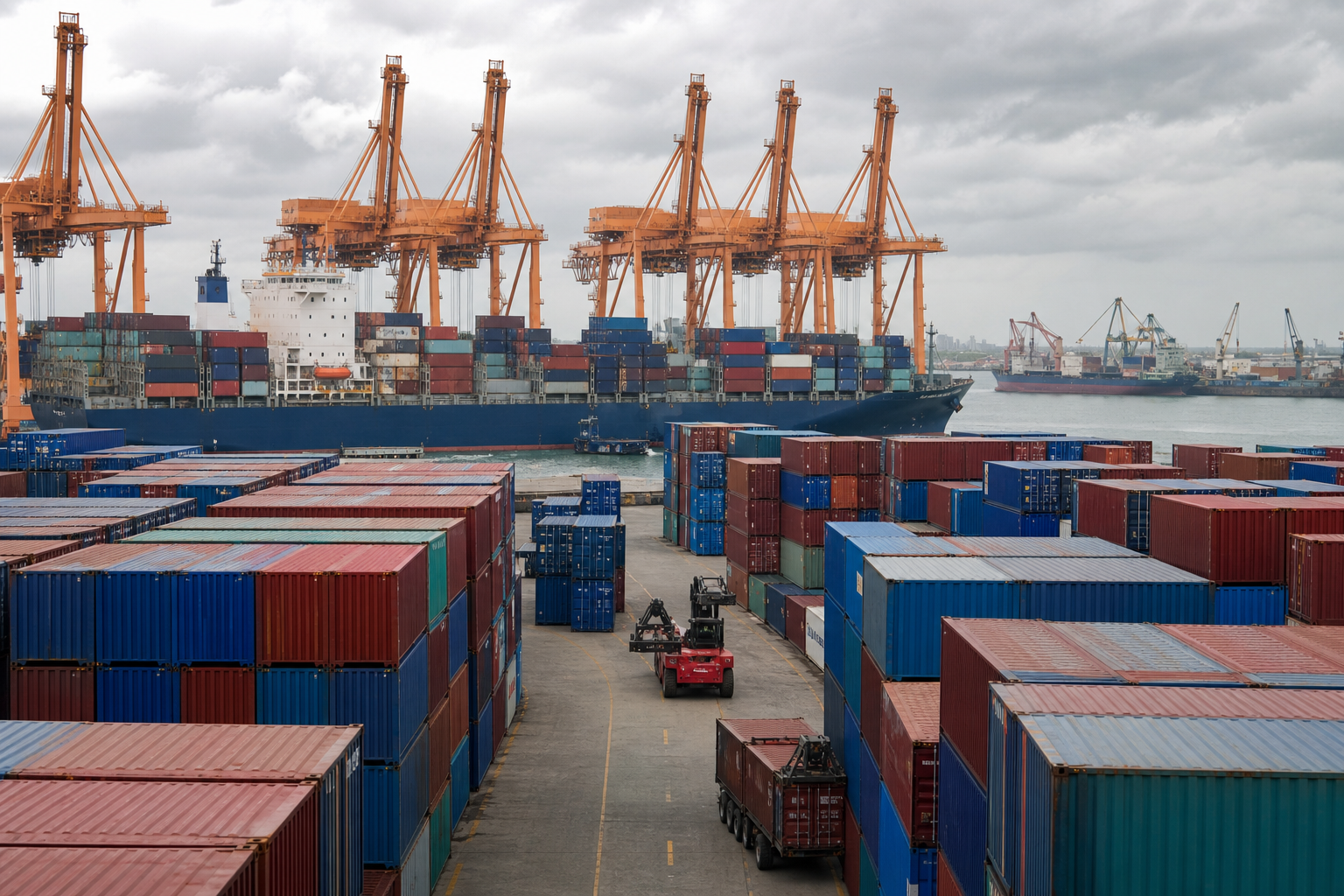
Vietnam's cumulative trade deficit crossed $20 billion through the first half of July 2026, according to preliminary data from the General Department of Customs. Total two-way trade reached $601.51 billion year-to-date, up 27.77% from the same period a year earlier, yet the headline growth masks a deteriorating near-term balance.
Export Engine Stalls in Early July
For the first half of July (July 1–15), export turnover came in at roughly $23.95 billion, slipping 1.07% from the previous half-month period. The decline was not broad-based but concentrated in a handful of high-value categories, according to VnEconomy. Of the five export groups that individually surpassed $1 billion in value during the period, three recorded outright declines.
Electronics: A Tale of Two Segments
Computers, electronic products, and components — Vietnam's largest single export category — fell 10.32%, erasing roughly $754 million in value. That single swing was enough to drag the overall export total lower. Machinery and equipment edged down 0.62%, consistent with cautious global capital-investment sentiment. Phones and components bucked the trend, however, surging 13.47% and providing a meaningful offset. The divergence likely reflects different order cycles within the electronics supply chain: handset shipments drew on previously accumulated inventory, while component export schedules were reset lower by weaker end-market demand.

Consumer and Agricultural Goods Offer No Rescue
Textiles rose 4.34%, pointing to improving order books in certain major markets, but footwear fell 4.04%, illustrating the uneven recovery in consumer spending across developed economies. Agricultural exports remained volatile at the product level. Vegetables and fruit jumped 35.94% and tea surged 77.18%, but both categories are too small in absolute terms to move the aggregate needle. Rice tumbled 29.86% and black pepper dropped 16.48%, pulling the overall farm-goods contribution into negative territory. The swings underscore how exposed Vietnamese agricultural exporters remain to global price and demand cycles, with little buffer from volume diversification.
Import Side Keeps Climbing
While exports retreated, imports rose 2.26% to approximately $27.59 billion in the same half-month window, according to the Customs report. The primary driver was a 14.36% jump — over $1.55 billion — in electronics components and computers coming into the country. Manufacturers appear to be front-loading inputs ahead of anticipated production ramp-ups, even as finished-goods exports have not yet caught up. That timing mismatch puts pressure on corporate cash flow and inventory positions in the short run. Energy imports softened considerably: oil product imports fell 23.24% and liquefied gas dropped 39.43%, reflecting global energy prices hovering in the $60–$70 per barrel range amid easing supply tensions.

FDI Sector Drives Both Sides of the Ledger
Foreign-invested enterprises remain the dominant force in Vietnamese trade, but their own balance deteriorated in the period. FDI-sector exports came in at $19.21 billion, down 1.64%, while FDI imports reached $20.97 billion, up 5.96%. The foreign sector's growing import appetite — concentrated in components and intermediate goods — is the single largest structural factor behind the widening deficit. Domestic firms, by contrast, continued to run a smaller surplus but lack the scale to offset the FDI sector's imbalance.
Structural Imbalance or Temporary Phase?
The juxtaposition of rising component imports alongside falling finished-goods exports suggests a production lag rather than a fundamental collapse in competitiveness. If global demand stabilizes and order books fill in the second half of the year, the imported inputs should convert into exportable output over the next one to two quarters. The risk scenario is that external demand remains soft — particularly in the United States and Europe — while input costs continue to accumulate, prolonging cash-flow stress across the manufacturing base. Nguyen Thi Quynh Hoa of the Institute for Strategy and Policy Research on Industry and Trade noted that managing the deficit requires "systemic solutions that also build long-term foundations for sustainable growth."
Investor Takeaway
For investors tracking Vietnam's manufacturing cycle, the early-July data present a mixed picture. The surge in electronics component imports is a forward-looking signal that producers expect a demand recovery and are positioning for it. Whether that bet pays off depends heavily on order trends from major consumer markets in the coming weeks. A sustained deficit above $20 billion cumulatively will weigh on the dong and could prompt the State Bank of Vietnam to manage FX reserves more actively. Monitoring the ratio of electronics imports to electronics exports — which compressed sharply this fortnight — is the clearest real-time indicator of whether the production cycle is accelerating or stalling.