Vietnam closed the first half of 2026 with real GDP growth of 8.18%, accelerating from 7.63% a year earlier, as newly registered foreign investment pledges surged 61% year-on-year to $34.65 billion. Shan Saeed, Chief Economist at IQI Global Malaysia, told Vietnam News Agency that the country has moved well beyond its original pitch as a low-cost alternative to China, and now represents one of Asia's most durable structural investment stories.
Manufacturing Pulls Ahead of the Pack
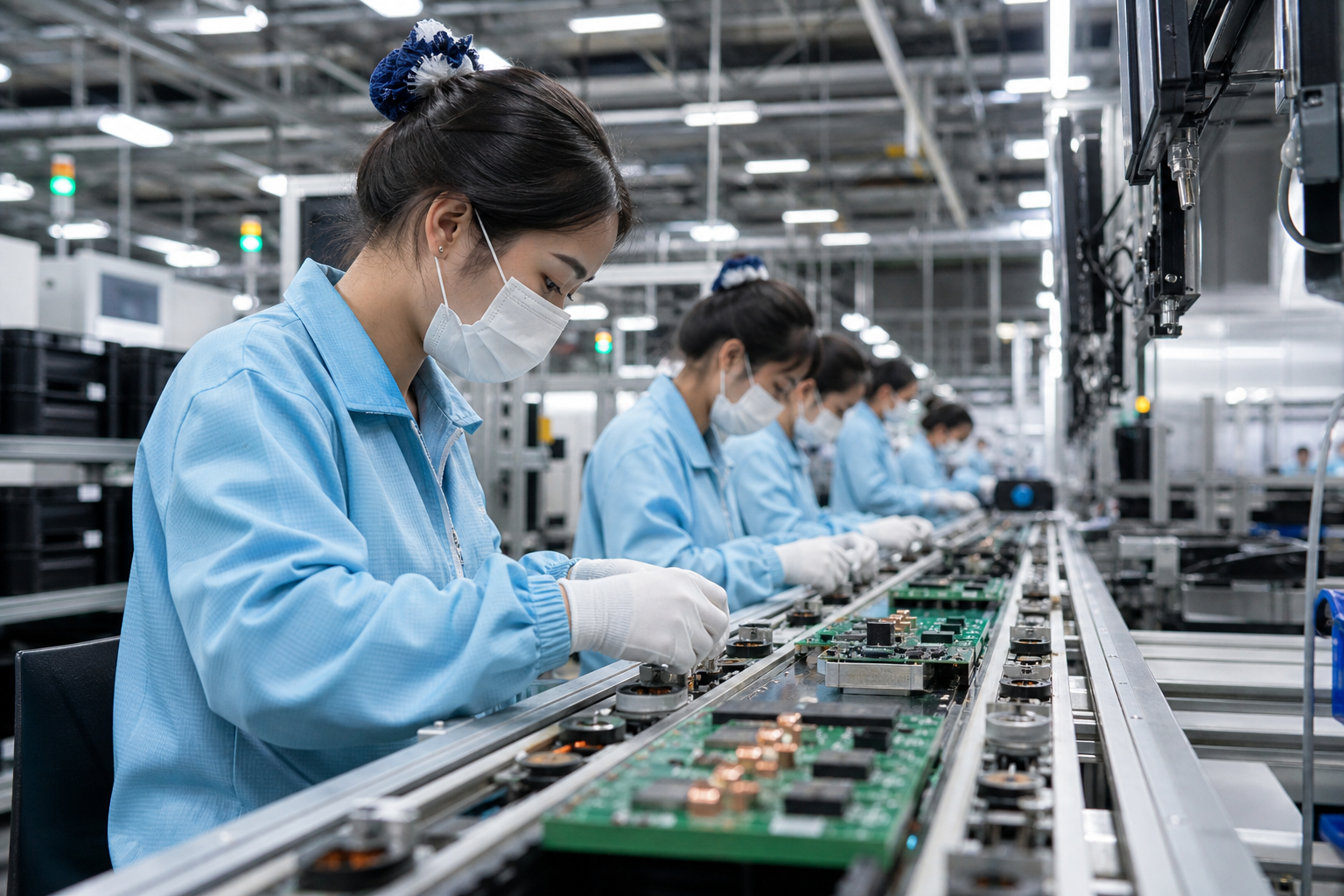
The sectoral breakdown of H1 growth tells the clearest part of the story. Industrial added value rose 9.86% year-on-year, with manufacturing and processing — Vietnam's export engine — expanding 10.23%. Services added 8.09%. This composition matters: growth is being generated by capital-intensive production rather than consumption or government spending alone. Vietnam is deepening its role in electronics, machinery, components, and advanced manufacturing networks, a shift analysts have tracked for several years but which the H1 data now confirms at scale.
Trade Volumes Signal Industrial Expansion
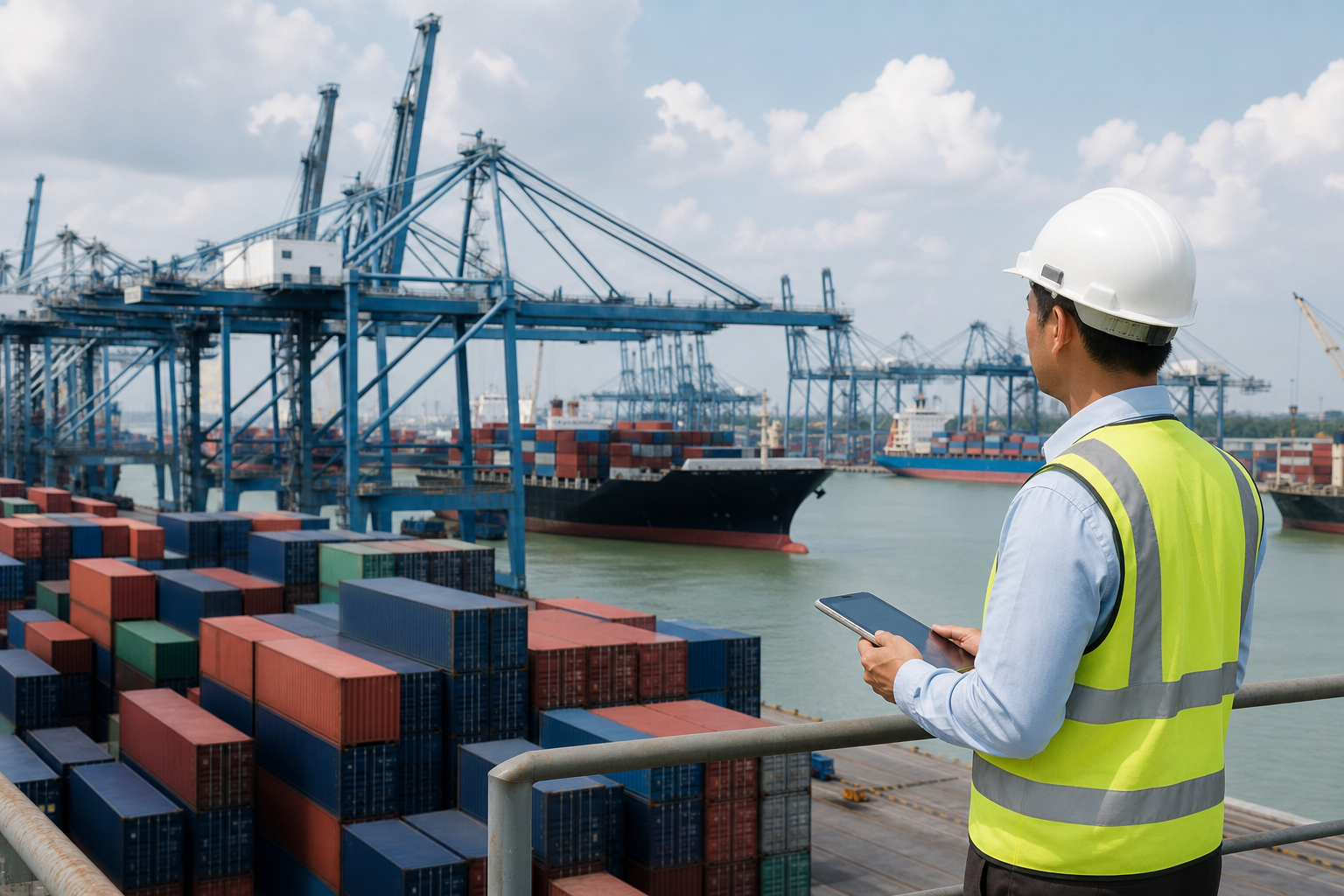
Total trade turnover approached $549.69 billion in the first half, up 27.1% annually. Exports climbed 21% to $266.52 billion while imports jumped 33.4% to $283.17 billion, producing a modest trade deficit. The import mix, however, is not a warning sign. Machinery, production equipment, components, and intermediate goods dominated inbound shipments, pointing to capacity build-out rather than consumer spending. Saeed frames the import surge as evidence of supply-chain investment and inventory rebuilding by manufacturers already operating inside Vietnam. A sustained deficit would nonetheless increase pressure on export earnings and exchange rate management — a dynamic the State Bank will need to monitor closely into H2.

FDI Pledges at a Four-Year High
Realised FDI rose 11.2% to $13.03 billion in H1, the strongest first-half reading since 2022. The gap between the $34.65 billion in registered pledges and actual disbursement remains wide, and Saeed identifies the pace of converting commitments into operational assets as one of the most consequential variables for full-year performance. Electronics, semiconductors, logistics, infrastructure, and clean energy are the sectors drawing the heaviest interest. Global manufacturers are not simply reacting to near-term trade tensions; they are positioning for the next industrial cycle, which gives Vietnam's investment pipeline a duration that shorter-cycle trade diversion plays typically lack.

Inflation Keeps Policy in a Narrow Lane
Consumer prices fell 0.39% month-on-month in June but remained 4.69% higher than a year earlier. Average H1 headline inflation of 4.38%, alongside core inflation of 4.12%, leaves Vietnam's monetary authorities with limited room. Credit conditions can continue supporting growth, but any easing beyond the planned trajectory risks reigniting price pressures. Saeed argues the optimal policy mix demands tight coordination across credit management, public investment disbursement, and exchange rate stability — three levers that pull in different directions if not sequenced carefully.
Upper-Middle-Income Status Changes the Conversation
The World Bank's reclassification of Vietnam as an upper-middle-income economy arrived at a meaningful inflection point. The designation reflects decades of industrialisation, export expansion, and global supply-chain integration. It also reframes the investment thesis: cost competitiveness remains relevant but is no longer the primary draw. Productivity, technology adoption, institutional quality, and domestic value creation are becoming the metrics by which Vietnam's next phase of development will be judged. Rising incomes mean higher wage expectations, which reinforces the urgency of moving up the value chain rather than competing on labour costs alone.
2026 Growth Forecast and Key Risks
Saeed's baseline projection puts full-year real GDP growth at 8.7–9.0%, with 9.4% as an achievable but execution-dependent upside scenario. Hitting even the lower end from an 8.18% H1 base requires a meaningful second-half acceleration driven by faster public investment disbursement, continued manufacturing expansion, and quicker FDI realisation. Four risks temper the outlook: exposure to weaker global demand and trade fragmentation; the potential for rapid credit growth to distort real estate markets and bank asset quality; current account vulnerability if FDI disbursement slows; and the structural challenge of sustaining productivity gains as incomes rise. None of these risks is new, but their interaction in the second half will determine whether Vietnam's 2026 growth story meets its billing.
Investor Takeaway
For capital allocators, the H1 data sharpens a thesis that has been building for several years. Vietnam's manufacturing base is deepening in exactly the sectors — electronics, semiconductors, precision components — where global supply chains are being actively restructured. The 61% jump in FDI pledges reflects genuine long-horizon commitment, not opportunistic re-routing. The practical question is execution: land clearance, infrastructure delivery, and skilled-labour supply will determine whether the pledge-to-disbursement gap closes quickly enough to sustain growth near the upper end of forecasts. Investors with exposure to Vietnam-linked manufacturers, industrial real estate, or logistics infrastructure should watch H2 public investment data and State Bank credit guidance as the clearest leading indicators.