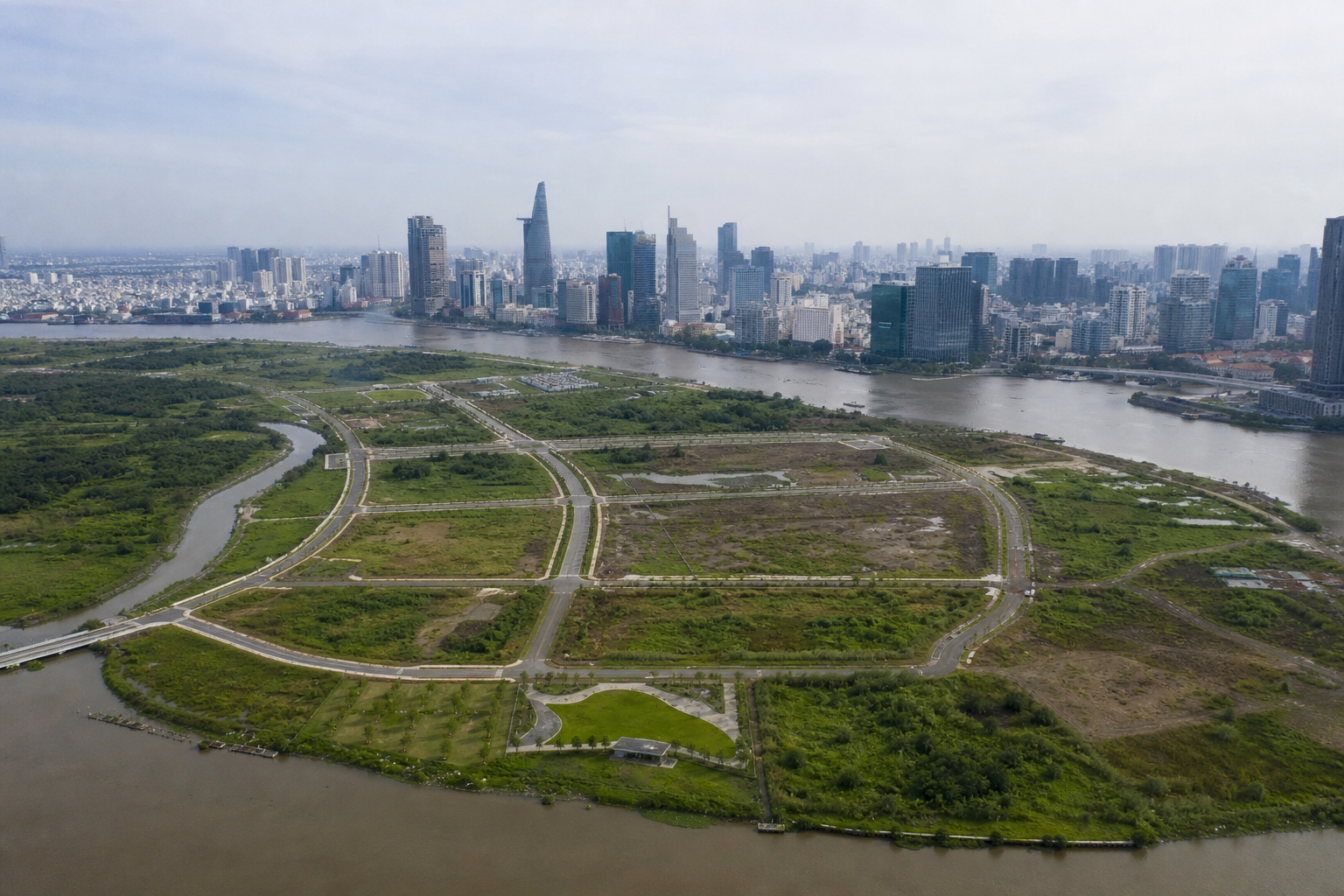
Vietnam's top leader has drawn a clear line between state economic dominance and state economic privilege, directing that the country's public sector must earn its leading role rather than rely on subsidies or monopoly protection. General Secretary and State President Tô Lâm issued the directive on July 6 through the Central Steering Committee on Institutional Improvement, following the committee's first plenary session with the Finance Ministry Party Committee.
Redefining the State's Economic Role
The core shift in the new directive is conceptual. State economic actors must demonstrate their leading position through the ability to guide, regulate, and maintain macroeconomic stability — not through administrative privileges or the old request-and-grant mechanisms that have long distorted resource allocation in Vietnam. The state sector is redefined as a unified whole encompassing the national budget, public assets, land, natural resources, infrastructure, national reserves, state-owned enterprises (SOEs), state credit institutions, and state capital.
This framing draws directly on Politburo Resolution 79 and signals that the party intends to treat public assets as a portfolio to be actively managed rather than passively held by fragmented agencies.

SOEs Face Modern Governance Standards
The directive requires state-owned enterprises to adopt modern, transparent, and competitive governance standards. SOEs are expected to lead in digital transformation, green transition, and innovation in strategic sectors. The committee explicitly called for blocking "group interests, backyard businesses, term-based investment cycles, and prolonged loss-making without clear accountability" — a candid acknowledgment of the patronage dynamics that have historically weakened Vietnam's state enterprise sector.
Resource management will shift from fragmented oversight to unified lifecycle governance, covering planning, allocation, exploitation, accounting, monitoring, and performance evaluation. Value added and contribution to sustainable development will become the primary yardsticks, replacing simpler metrics like asset size or revenue.

A Legal Overhaul Is Coming
The committee ordered a full review of all laws and regulations touching state economic activity, with priority fixes targeted for 2025 and mandatory legislative changes required by 2026. This timeline is tight by Vietnamese standards and suggests the leadership is treating institutional reform as an urgent precondition for the country's stated ambition of reaching upper-middle-income status before 2030.
The review scope is broad: any rule enabling implicit subsidies, administrative monopolies, or opaque capital transfers between state entities is a candidate for revision.
FDI Policy Pivots to Quality
Alongside the SOE reforms, the same directive signals a decisive pivot in foreign direct investment strategy. Vietnam will move away from volume-based FDI attraction — chasing headline registered capital figures — toward a selective model prioritizing advanced technology, high value-added production, and genuine linkages with domestic suppliers.
Investment incentives will be tied to verifiable commitments: technology transfer, R&D spending, training of Vietnamese workers, raising local content ratios, and environmental compliance. The government will also study mechanisms to claw back incentives from investors who fail to meet their pledges and will strengthen controls against transfer pricing and trade fraud.
The framing is explicit that Vietnam will not trade away environmental standards, economic security, data security, or defense interests for short-term capital inflows with low spillover effects. The goal is for FDI to lift Vietnam's position in global value chains, not merely add assembly capacity.
Air Pollution Enters the Governance Agenda
In a notable broadening of scope, the committee also classified air pollution in Hanoi, Ho Chi Minh City, and surrounding areas as a serious and urgent problem affecting public health, labor productivity, and the investment environment. It called for inter-regional coordination mechanisms, comprehensive emissions inventories, and modern monitoring systems — with the same accountability logic applied to SOEs: no prolonged problem without defined responsibility, deadlines, and measurable outcomes.
Investor Takeaway
For foreign investors, the dual thrust of this directive matters. Tighter SOE governance and market-discipline requirements reduce the risk of unfair competition from state-backed incumbents in sectors that are opening up. At the same time, the selective FDI framework raises the bar for entry: projects without technology transfer commitments or domestic supply chain plans will find incentives harder to secure. Investors who can credibly demonstrate value-chain upgrading and green credentials are best positioned for the next phase of Vietnam's growth story.
Images: Pixabay