Vietnam is mobilising roughly 368,800 billion dong — about $14.2 billion — across five metro projects designed to thread Ho Chi Minh City together with Long Thanh International Airport, scheduled to open commercially on 1 December 2026. The scale of the commitment, assembled within a single year through cooperation between Ho Chi Minh City and Dong Nai province, signals that Long Thanh is being built not merely as a terminal but as the backbone of a regional transit system.
Three Corridors, Five Projects
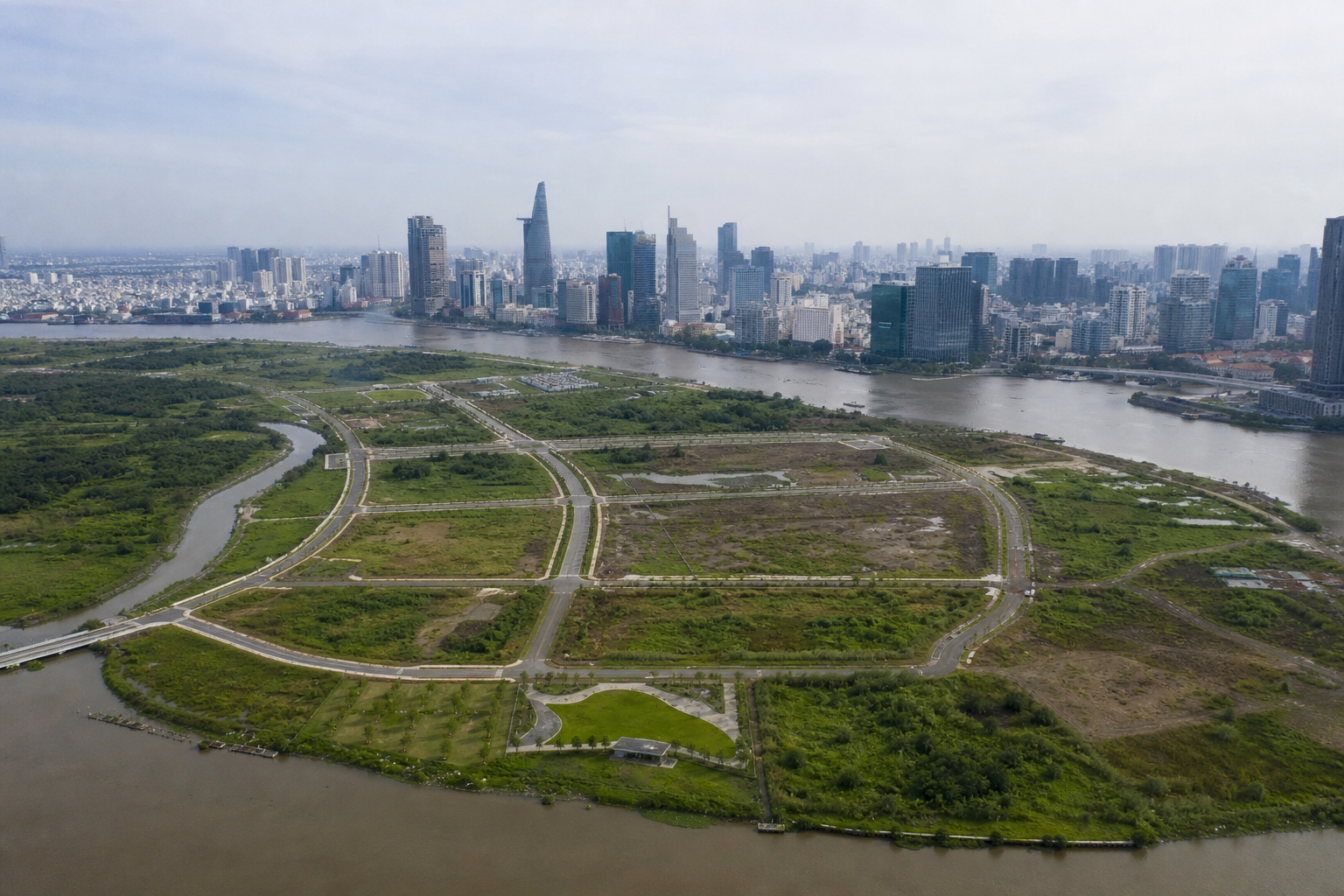
Planners have organised the investment around three distinct rail corridors rather than a single trunk line. The first and most central runs from Tan Son Nhat airport through Ben Thanh and Thu Thiem before terminating at Long Thanh — a spine that already includes the under-construction Metro Line 2 sections between Ben Thanh and Tham Luong, and between Ben Thanh and Thu Thiem. The Thu Thiem–Long Thanh metro, currently in feasibility study by Dai Quang Minh Investment JSC, is pencilled in for a September 2026 groundbreaking.
The second corridor branches through Phu Huu, pairing Metro Line 6 Phase 1 — a 22.9-kilometre stretch from Tan Son Nhat to Phu Huu — with the same Thu Thiem–Long Thanh segment. Metro Line 6 Phase 1 is planned to break ground in December 2026, giving the corridor two anchor construction events in rapid succession.
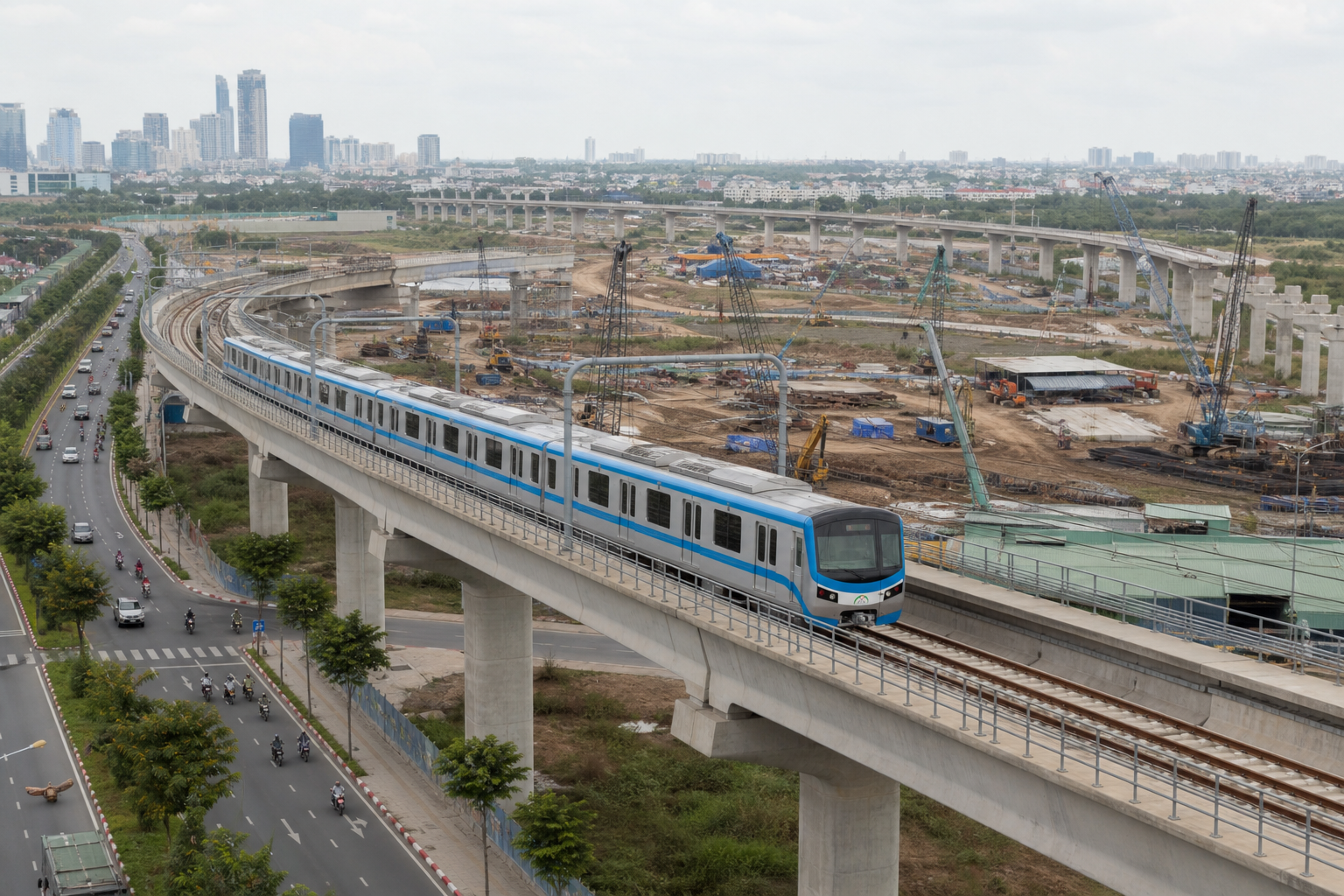
The third corridor extends the existing Metro Line 1 (Ben Thanh–Suoi Tien) beyond its current terminal. Dong Nai's People's Council has approved the extension from Suoi Tien Bus Station through the Dong Nai administrative centre to Long Thanh Airport. Dong Nai authorities have already instructed local agencies to accelerate land clearance and compensation procedures, and the project has been proposed to the national government for emergency-order construction status.

Long Thanh as Rail Hub
Once operational, Long Thanh will be served by at least three rail systems simultaneously: the north–south high-speed railway, the Thu Thiem–Long Thanh metro, and the extended Metro Line 1. A fourth line is also under study — Metro Line 3 connecting Vung Tau and Ba Ria–Phu My to the airport, which would make Long Thanh the first Vietnamese international airport with a direct rail link to the coast. Express services on that line are projected to cover the Vung Tau–Long Thanh leg in 30 minutes.
The high-speed railway will primarily serve intercity travellers at lower frequencies and higher fares. Metro services, with denser schedules and cheaper tickets, are expected to absorb the bulk of airport access demand. Journey time from Thu Thiem station to Long Thanh Airport is pegged at 31 minutes in the project's initial operating phase.
Construction Timeline Realities
Railway engineers quoted in Vietnamese media estimate that a standard metro line takes four to five years to build once groundbreaking begins — provided land acquisition disputes and procurement bottlenecks are resolved promptly. That caveat matters given Vietnam's long history of metro delays; Ho Chi Minh City's Metro Line 1 ran nearly a decade behind its original schedule before opening in late 2024.
With several of the new corridors targeting 2026 groundbreaking dates, investors and planners should map completion into the early-to-mid 2030s under a realistic timeline. The airport itself will therefore rely on highway and expressway access — already expanded — for at least the first several years of commercial operation.

Capital Structure and Special Mechanisms
The $14.2 billion is described as a preliminary aggregate across all five projects; final costs will depend on detailed engineering, land acquisition outcomes, and financing structures. The speed of project approval has been enabled by special governance mechanisms that allow Ho Chi Minh City and Dong Nai to fast-track investment decisions and, in Dong Nai's case, pursue investor selection under exceptional procedures.
Private capital is part of the picture: Dai Quang Minh, a property developer, is leading feasibility work on the Thu Thiem–Long Thanh metro under a public-private arrangement, a model Vietnam has been expanding as public budgets face pressure from simultaneous infrastructure pushes across roads, ports, and rail.
Investor Takeaway
The convergence of metro, expressway, and high-speed rail at a single airport node represents one of the most concentrated infrastructure bets in Southeast Asia over the next decade. For investors tracking Vietnamese real estate, logistics, and construction, the three corridors map directly onto the districts — Thu Thiem, Phu Huu, and the Suoi Tien–Long Thanh axis — most likely to capture land value uplift as construction milestones are confirmed. The critical variable remains execution speed: each groundbreaking announcement will test whether Vietnam's reformed project-approval machinery can finally deliver metro infrastructure on schedule.