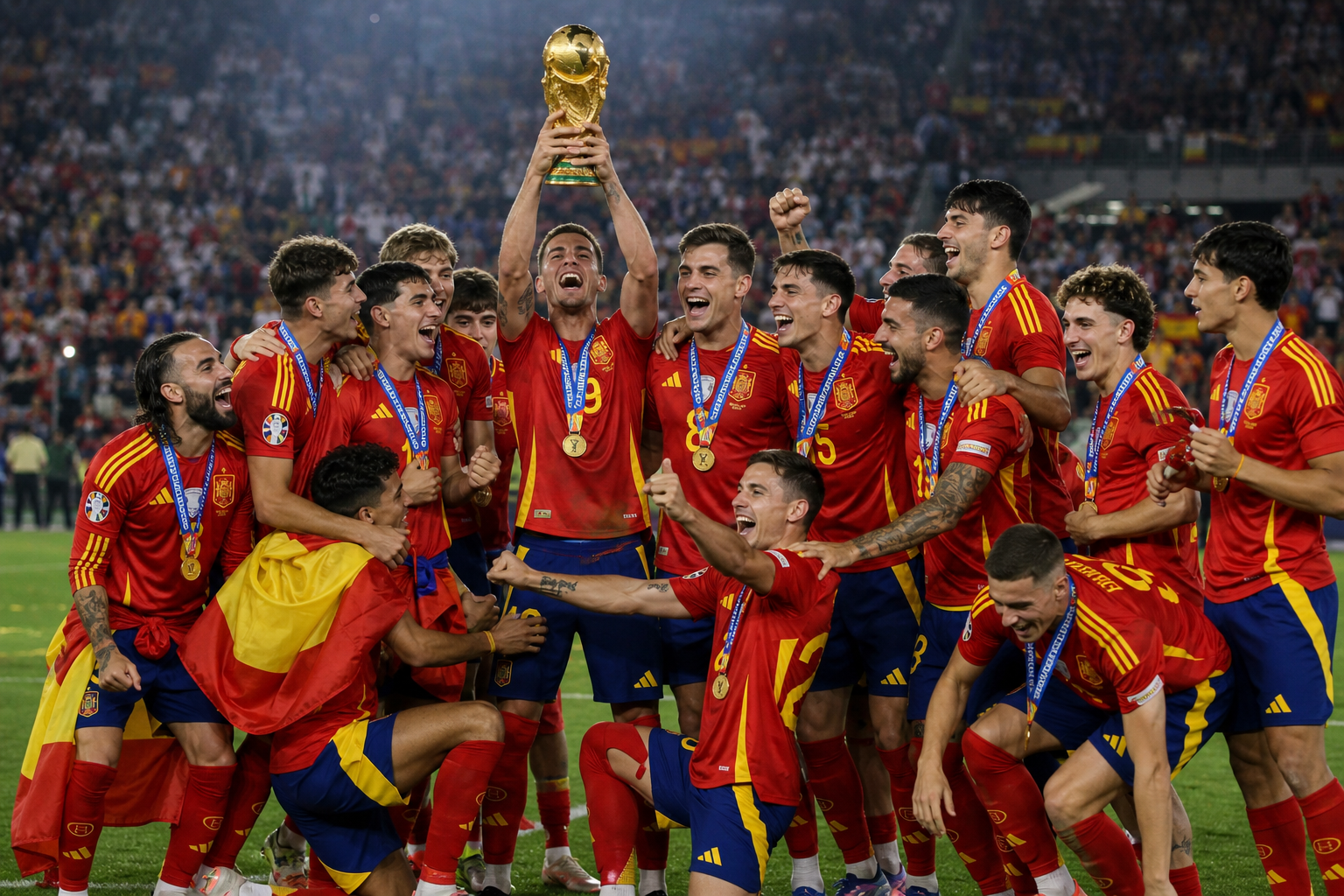
Spain claimed the 2026 FIFA World Cup title with a 1-0 victory over Argentina in the final, with the decisive goal arriving in the 106th minute of extra time. The win confirms Spain as the world's best team, extending a remarkable run that already includes the 2024 European Championship.
Collective Strength Over Individual Brilliance
Media attention before the final had centered almost entirely on Lionel Messi, yet Spain's triumph underlined a familiar truth: organized team football consistently beats reliance on individual genius. Coach Luis de la Fuente fielded a side that pressed high, passed quickly, and moved as a unit, echoing the same principles that brought them the Euro crown two years earlier.
Spain controlled 65% of possession and registered 20 shots. Argentina, by contrast, managed just two shots across the entire match — both coming in the final minutes of extra time as they scrambled for an equalizer. The difference in ambition was stark from the opening whistle.

Martinez Delays the Inevitable
Argentina's best performer on the night was goalkeeper Emiliano Martinez, who made 12 saves to keep his side in contention long after the pattern of play had been established. Without that performance, Spain would likely have been celebrating well before extra time began.
The breakthrough finally came seconds into the second period of extra time. Pedro Porro delivered a cross to the far post, Nico Williams headed it across goal, and substitute Ferran Torres converted with a first-time finish. The balance of the game, which had been tilted toward Spain for 105 minutes, finally reflected itself on the scoreboard.
Argentina's Discipline Costs Them Dearly
Argentina's tactical approach — using physical intensity to disrupt Spain's passing rhythm — had worked effectively against England in the semifinal. Spain proved far harder to unsettle, moving the ball quickly enough to avoid the worst of the challenges. The plan unraveled visibly when midfielder Enzo Fernandez received a second yellow card late in normal time for a reckless foul on young center-back Pau Cubarsi, forcing Argentina to play extra time with ten men.
Post-match behavior damaged Argentina's image further. Nahuel Molina confronted Rodri after the final whistle, and Leandro Paredes was shown a red card for striking several Spanish players moments after the game ended. The Telegraph summarized the scoreline as "Football 1 – Football Killer 0."
Messi's Final Chapter
Messi finished the tournament with eight goals and four assists, carrying Argentina to the final almost single-handedly. Yet in the match itself his contributions were limited, and his most prominent moment came in a failed attempt to have Spain's Marc Cucurella sent off for a goal celebration. He wept after the medal ceremony, a moment that read widely as a farewell to the World Cup stage at age 39.
He finished the tournament without the Golden Boot, which went to Kylian Mbappe, and without the Best Player award, claimed by Rodri. The chance to become the first captain to win consecutive World Cups passed with the final whistle.
Spain's Place in History
Spain's tournament record was exceptional throughout: eight matches played, one goal conceded, and opponents managing only ten shots on target across the entire competition. They become the first nation to hold the men's and women's World Cup titles simultaneously, and only the second time Spain have won the men's tournament — the first being 2010, also as reigning European champions.
The spectacle surrounding the final drew its own commentary. FIFA president Gianni Infantino's claim that the 2026 edition was "the most amazing event in human history" sat awkwardly alongside a final that most neutral observers found underwhelming as a contest. A 27-minute halftime entertainment break interrupted the rhythm of the match and overshadowed what happened on the pitch.

What the Result Means
Spain's 2026 triumph confirms that their golden generation has not faded. Lamine Yamal did not need to be the star of the final — depth and tactical discipline carried the team through. For Argentina, the loss ends a cycle defined by Messi. The next cycle, almost certainly without him, begins now.