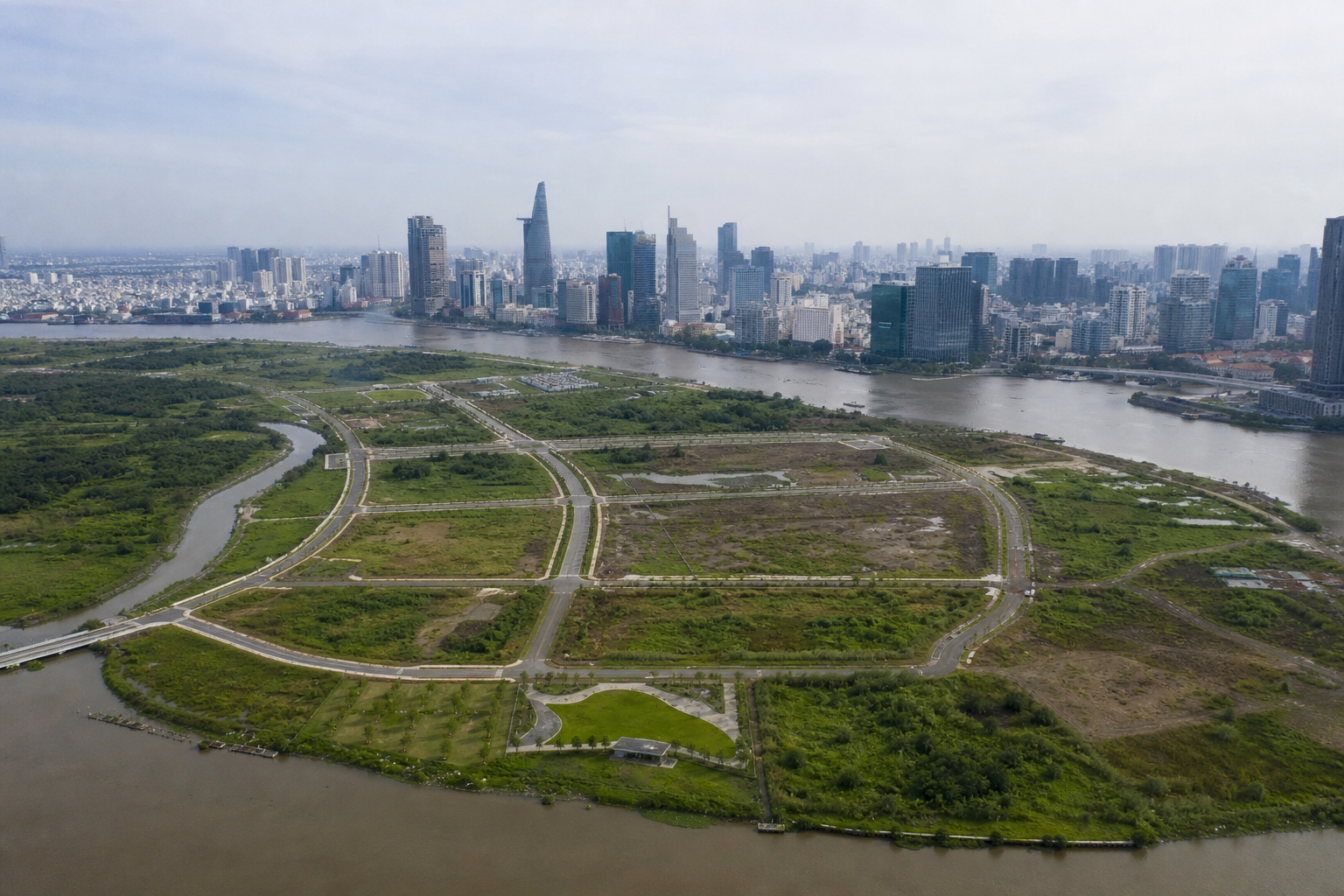
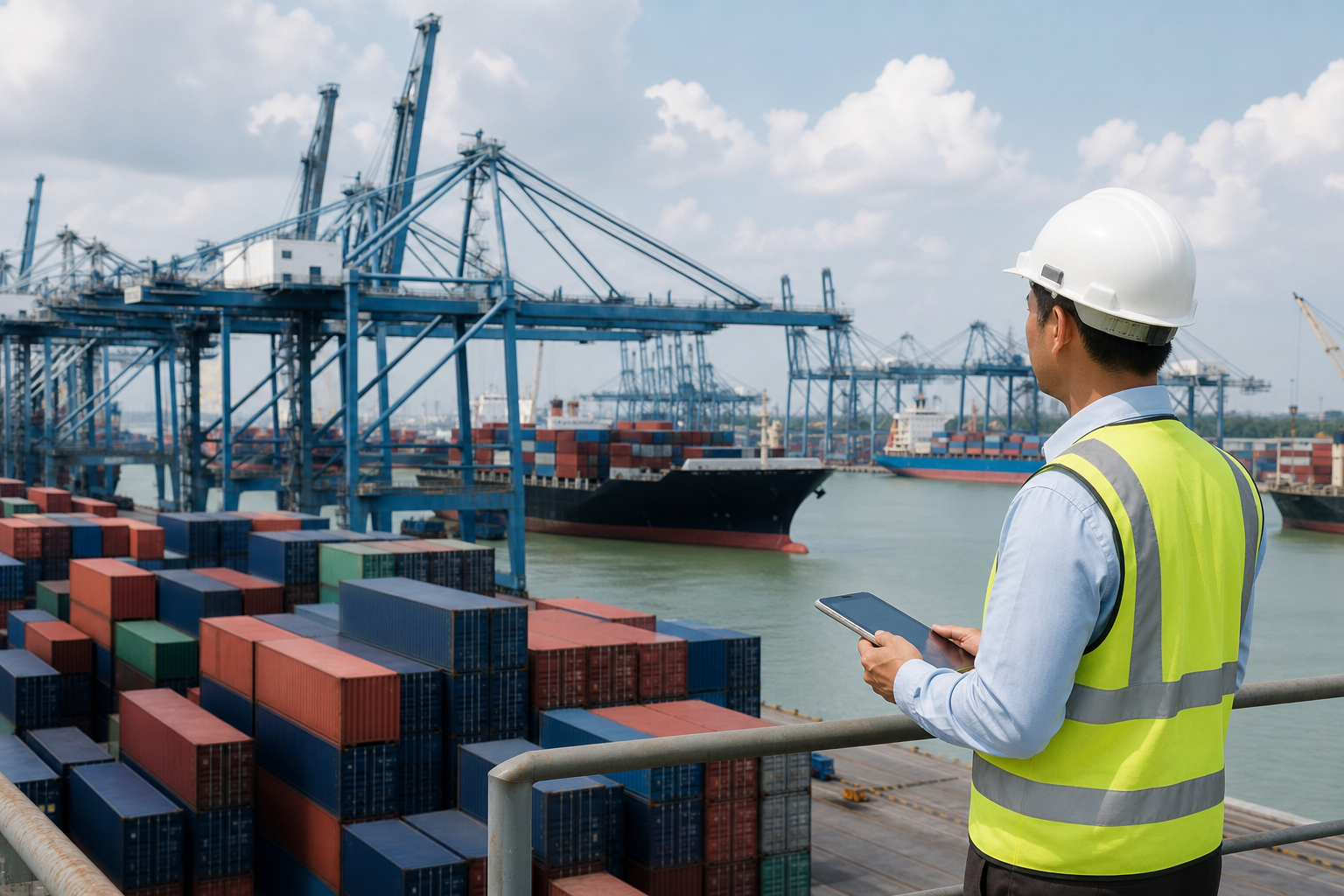
Vietnam registered $24.81 billion in foreign investment commitments during the first five months of 2025, a 34.9 percent jump year-on-year, even as policymakers signal that raw inflow numbers are no longer the primary goal. The Communist Party's Resolution 10, issued on June 8, marks a deliberate pivot from quantity to quality — targeting sectors such as semiconductors, artificial intelligence and clean energy rather than the labour-intensive assembly work that built Vietnam's export machine over the past four decades.
Rewriting the FDI Playbook
For most of its reform era, Vietnam competed for foreign capital largely on cost: low wages, generous tax holidays and cheap land. Resolution 10 explicitly rejects that model, directing the country to compete instead on institutional quality, infrastructure, skilled labour and a transparent regulatory environment. Party General Secretary and State President Tô Lâm, speaking at a June 30 national conference on the resolution's implementation, said Vietnam had entered "a new stage of development" and should focus on how international capital strengthens domestic capabilities rather than simply how much of it arrives.

Disbursement at a Five-Year Peak
The macro backdrop gives policymakers room to be selective. Disbursed FDI reached $9.75 billion in the January–May period, the highest first-five-month figure in at least five years, even as global trade uncertainty persisted. Manufacturing absorbed $14.52 billion — more than 70 percent of newly registered and adjusted capital — confirming Vietnam's deepening role as a regional supply-chain hub. Strong disbursement matters because it reflects actual construction and operations, not just signed memoranda of understanding that may never convert into factories.

Priority Sectors Under the New Framework
Resolution 10 identifies high technology, semiconductors, artificial intelligence, research and development, international financial services and clean energy as preferred investment categories. The logic is straightforward: these industries generate technology spillovers that can lift domestic firms, whereas traditional garment or footwear assembly tends to remain isolated from the local supplier base. The FDI sector already accounts for roughly 20 percent of GDP and more than 70 percent of export turnover, according to the Ministry of Finance, but linkages with Vietnamese-owned enterprises remain thin — a gap the resolution directly targets.
Global Minimum Tax Changes the Calculus
The timing of Resolution 10 is not coincidental. As the OECD's 15 percent global minimum corporate tax erodes the value of Vietnam's traditional incentive packages, policymakers acknowledge that tax holidays alone can no longer anchor investment decisions. Former Foreign Investment Agency director Phan Hữu Thắng described the resolution as a transition from maximising inflow volume to improving inflow quality, with institutional reform and administrative efficiency becoming the new competitive levers. Countries that cling to the old incentive model risk offering concessions that no longer move the needle for sophisticated multinationals.
What Foreign Investors Want
Mitsubishi Corporation's Vietnam vice president Takuya Sahashi voiced support for the policy direction at the June 30 conference, noting that Japanese companies have spent three decades building supply chains in transport equipment, electronics and industrial machinery. His message, however, carried a pointed condition: the strategy only works if domestic suppliers become capable enough to participate. Upstream industries, workforce skills and supplier development all need investment alongside the headline policy announcements. The presence of senior foreign executives at what is essentially a Party-level implementation conference signals that the government is genuinely seeking private-sector input rather than treating the resolution as a top-down directive.

Linkages as the Long Game
The deeper ambition embedded in Resolution 10 is industrial upgrading through osmosis — allowing advanced management methods, production standards and technologies to spread from foreign-invested firms into the broader Vietnamese economy. That process has worked in South Korea, Taiwan and, to a degree, Malaysia, but it requires sustained policy consistency over years, not just a bold resolution. Vietnam's ability to enforce environmental and governance standards on new entrants, while simultaneously helping local suppliers meet international quality benchmarks, will determine whether the shift from quantity to quality translates into durable productivity gains.
For investors, the resolution signals that Vietnam's approvals process for large, low-value projects may become slower and more scrutinised, while genuinely technology-intensive proposals should find a more receptive bureaucracy. The $9.75 billion disbursement figure suggests the pipeline is healthy enough to support that selectivity without starving the economy of capital.
Images: Pixabay