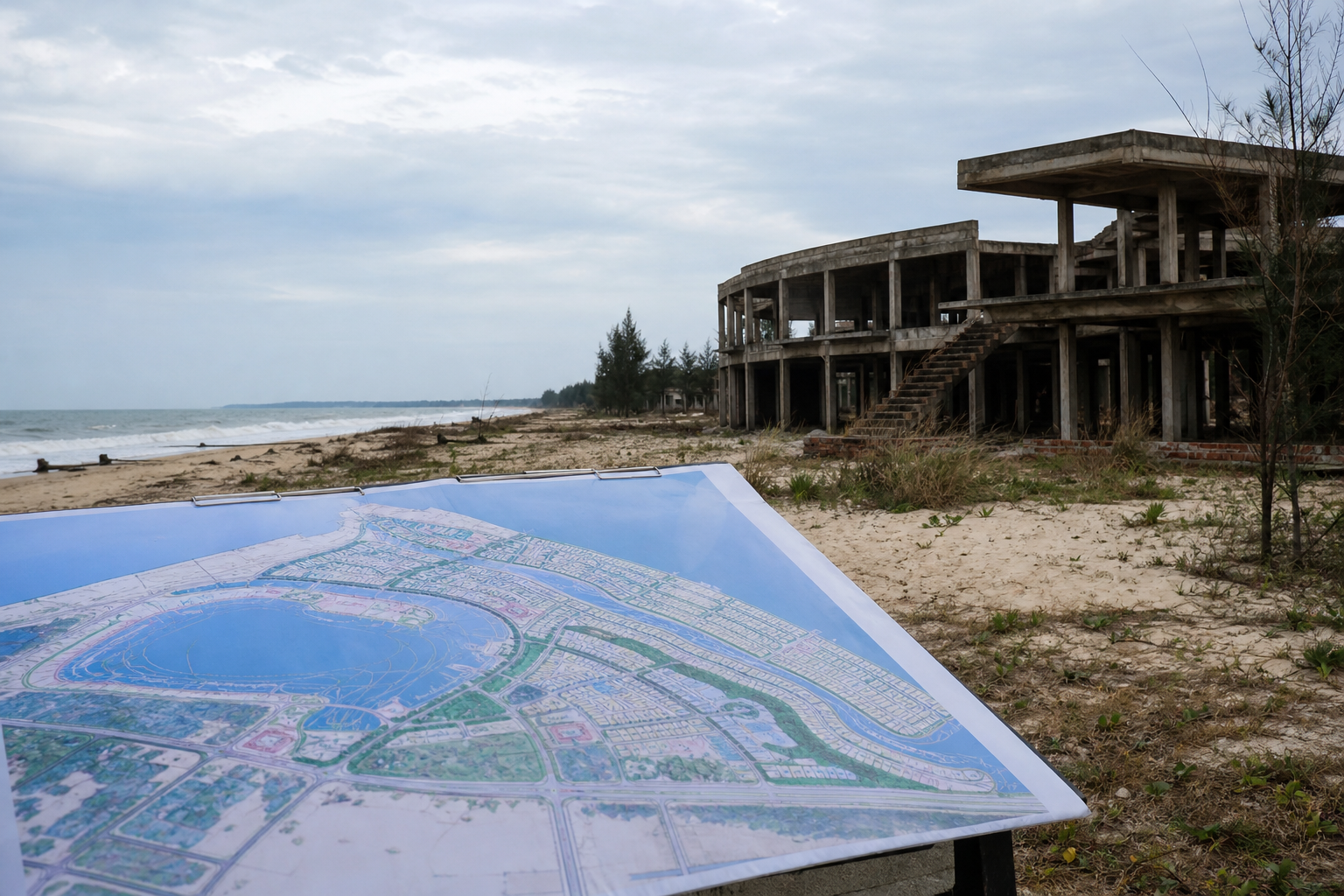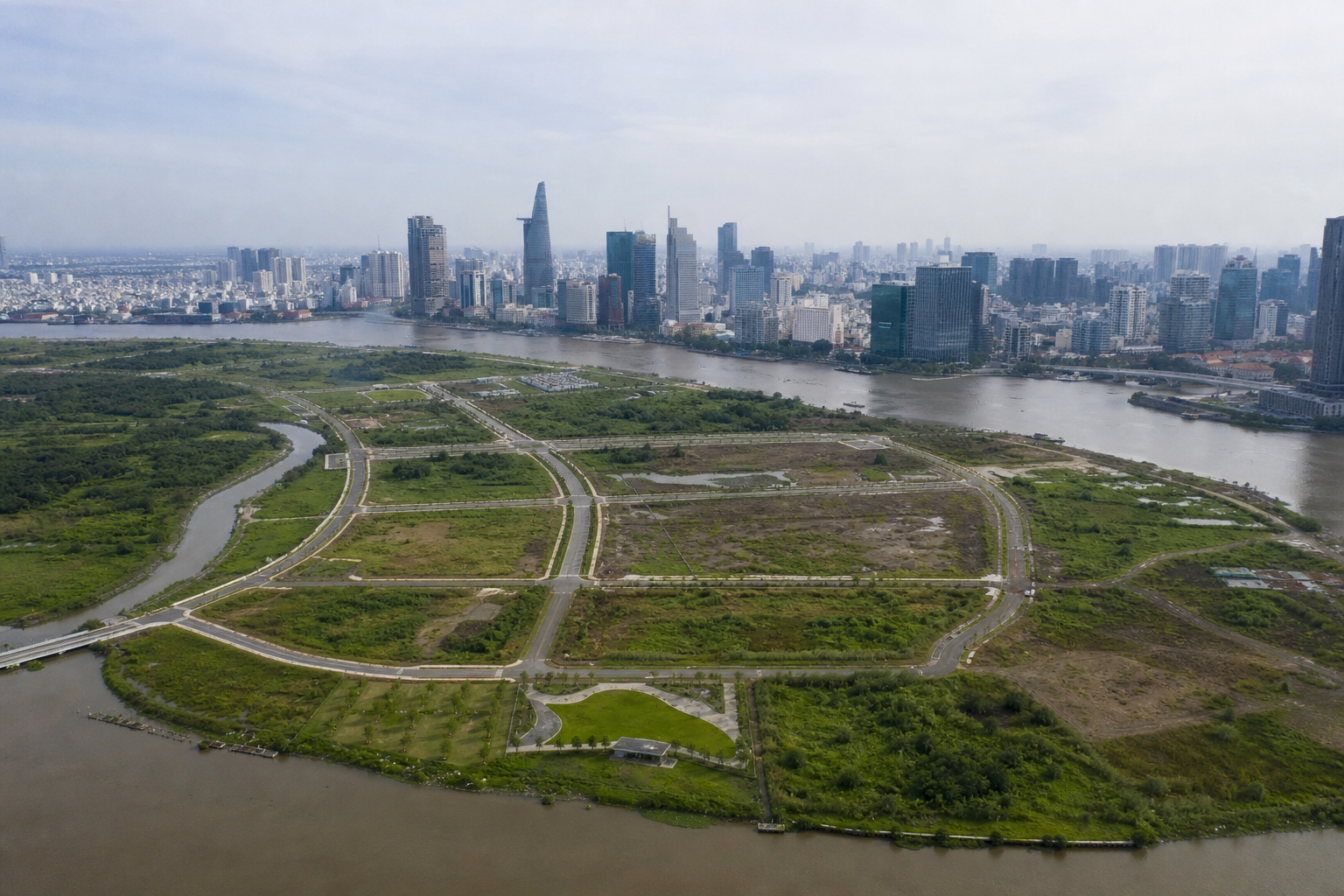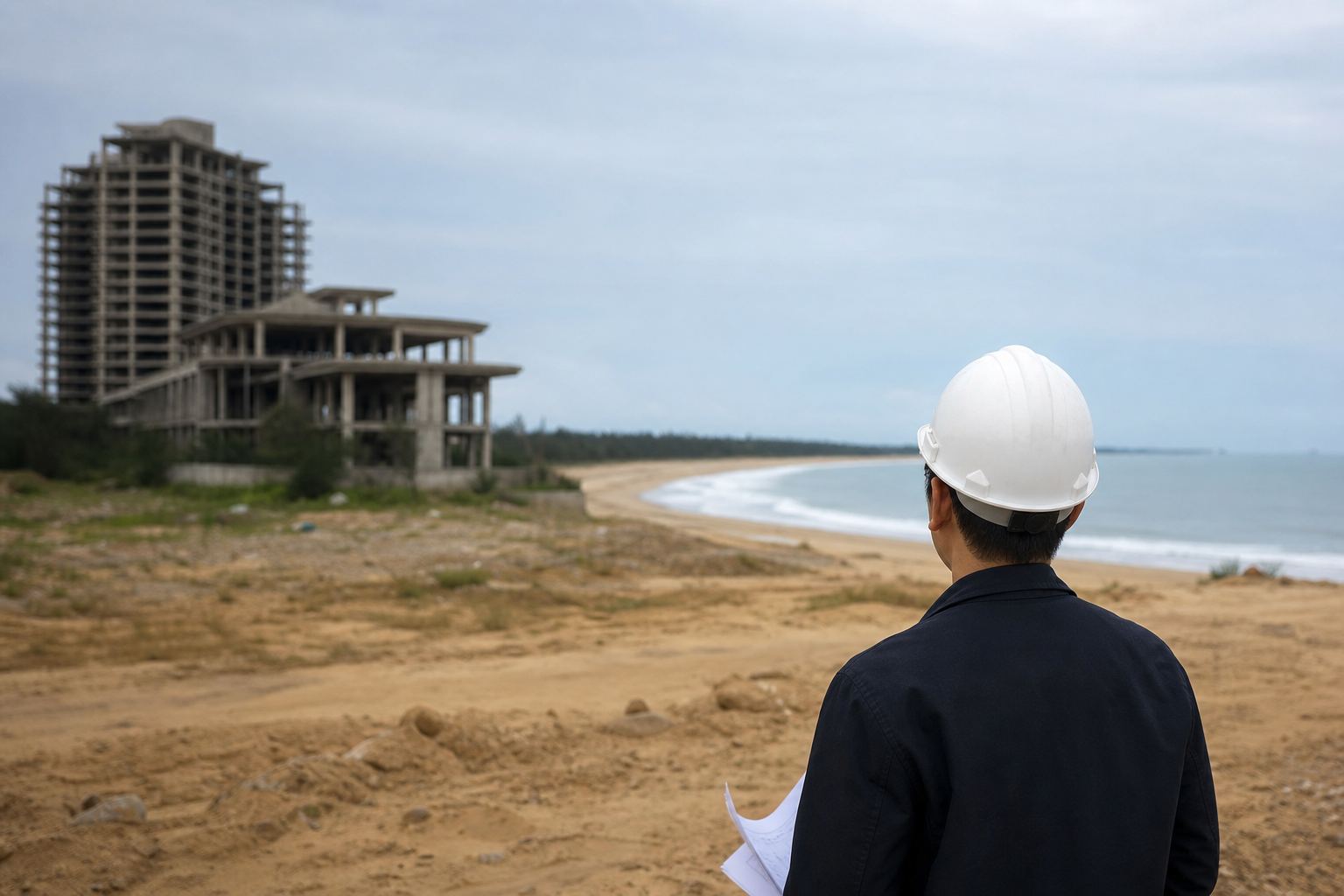
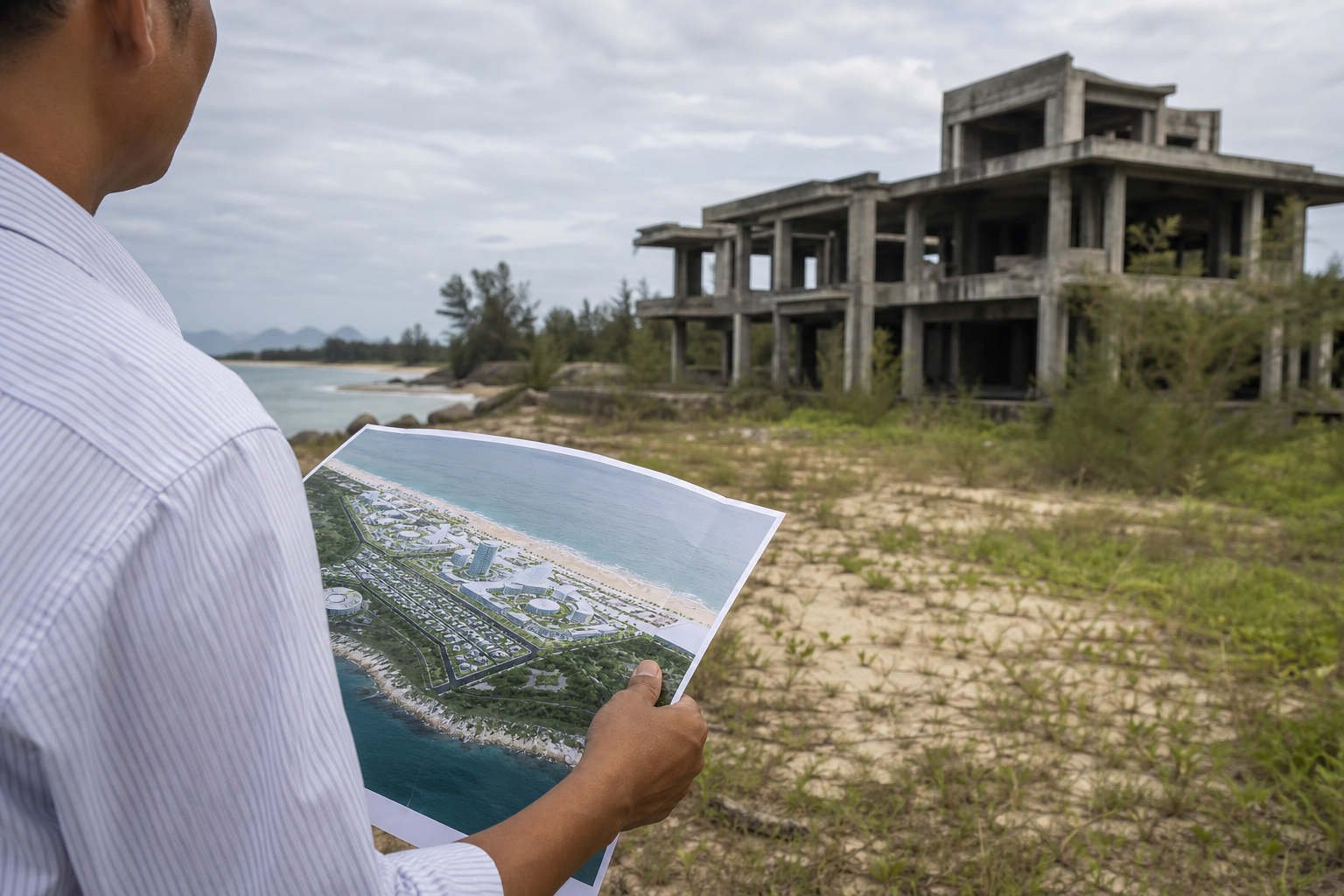
Quảng Trị province is pushing forward with an ambitious maritime economic hub covering more than 12,000 hectares while simultaneously grappling with a dormant coastal resort that has sat idle for years despite owing tens of billions of đồng in unpaid financial obligations. The contrast between the two projects illustrates the gap that often separates Vietnam's coastal development ambitions from on-the-ground execution.
Sen Ngư's Maritime Blueprint
The coastal commune of Sen Ngư, sitting on more than 13 kilometres of shoreline in Quảng Trị, has been designated a priority maritime economic zone under provincial planning now taking shape. According to CafeF, the zone is designed to develop two parallel tracks: fisheries logistics services and ecotourism. The combination is deliberate — fishing communities provide the base economy while tourism layered on top creates higher-value activity and employment diversification.
At over 12,000 hectares, the footprint is substantial for a single commune-level zone. Provincial planners are positioning Sen Ngư as a focal point rather than a peripheral add-on, signalling that Quảng Trị wants to move beyond its landlocked reputation and extract more economic value from its coastline.
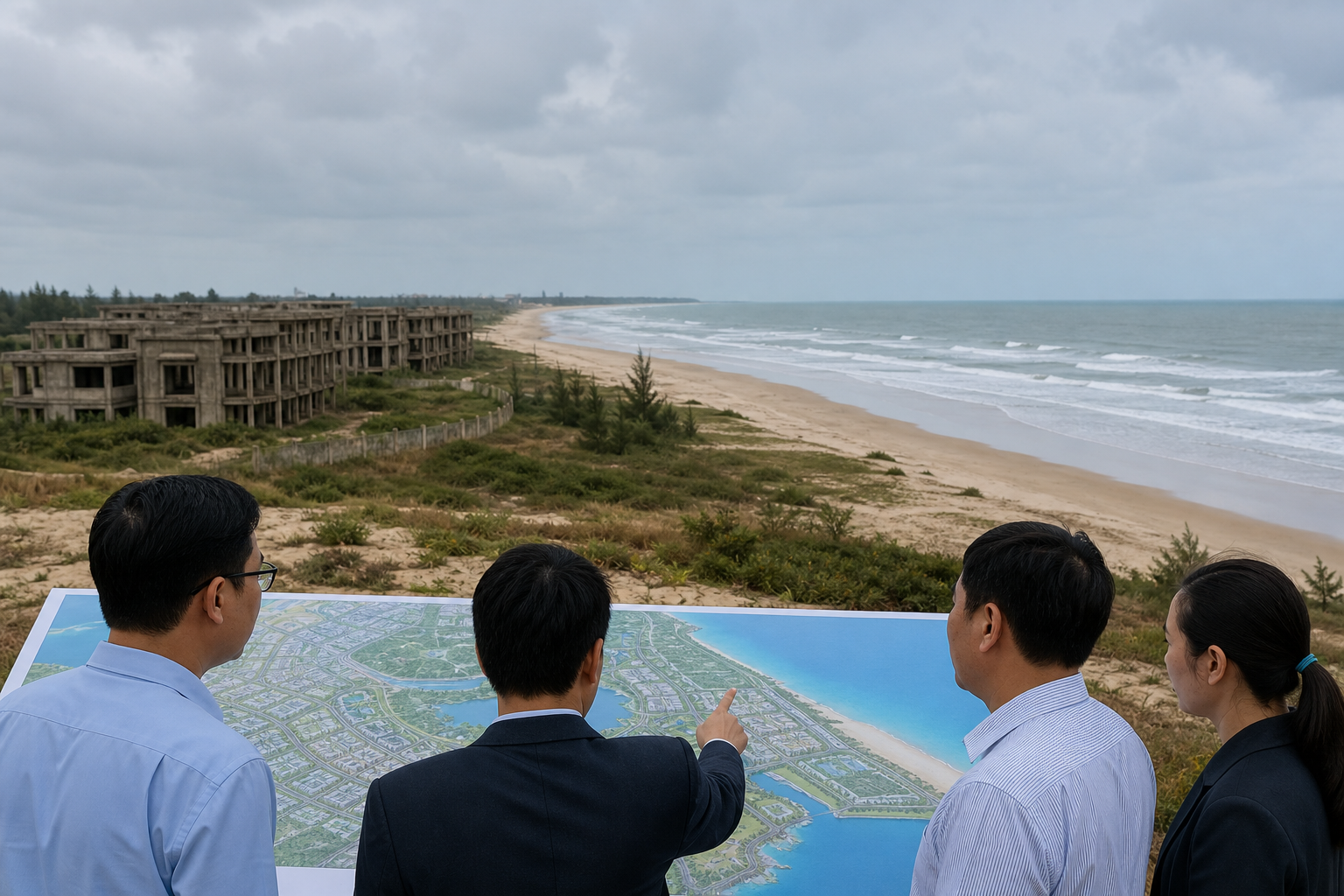
A 400-Billion-Đồng Ghost Project
Just as that blueprint advances, a separate investigation has exposed how difficult it can be to clean up failed coastal investments in the same province. The Sài Gòn – Bảo Ninh Ecotourism Resort, valued at over 400 billion đồng, has been chronically delayed and abandoned beside Bảo Ninh beach. The project meets the legal conditions for termination under Vietnamese regulations — years behind schedule and carrying unpaid financial liabilities running into the tens of billions — yet reclamation has not happened.
Quảng Trị province's inspectorate recently concluded a formal audit that assigned responsibility to both the investor and the relevant regulatory agencies for allowing the situation to drag on. The inspectors identified the reasons why outright termination cannot be executed immediately, pointing to procedural and legal constraints rather than any dispute over whether the project has failed.
Why Reclamation Stalls
The inability to reclaim land from a clearly non-performing project is a recurring issue across Vietnam's coastal provinces. Legal title disputes, incomplete documentation, and multi-agency sign-off requirements can each independently delay the process even when the underlying facts are not in dispute. In this case, the inspectorate's report acknowledges that the conditions for termination are met while simultaneously explaining why the administrative machinery has not yet delivered that outcome.
For provincial governments trying to attract fresh investment into new zones like Sen Ngư, stalled ghost projects represent more than an aesthetic problem. They occupy prime land, depress surrounding land values, create uncertainty about regulatory follow-through, and signal to prospective investors that commitments made by earlier developers may go unenforced for extended periods.
Coastal Development Tension
Quảng Trị's situation reflects a broader tension in Vietnam's coastal economy planning. The country has identified marine industries — fishing, aquaculture, logistics, and maritime tourism — as strategic pillars in its long-term development framework. Provinces along the central coast are competing to carve out distinct roles within that framework, and Quảng Trị's designation of Sen Ngư as a 12,000-hectare hub is part of that positioning.
But the institutional capacity to execute — approving projects promptly, monitoring compliance, and reclaiming land when projects fail — has not always kept pace with the scale of ambition. The Bảo Ninh case, now requiring a formal inspectorate conclusion just to establish who is responsible, shows how much administrative friction can accumulate around a single failed investment.
Investor Takeaway
For investors assessing Vietnam's coastal tourism and fisheries logistics sectors, Quảng Trị's dual story offers a useful data point. The province is actively expanding its investable footprint through the Sen Ngư zone, and the large designated area suggests genuine political commitment to development. At the same time, the Bảo Ninh episode is a reminder that land reclamation after project failure moves slowly through the Vietnamese legal system. Investors entering coastal zones should conduct thorough due diligence on site history, existing encumbrances, and the regulatory track record of the specific province — and factor in the possibility that neighbouring abandoned projects may not be resolved on any near-term timeline.