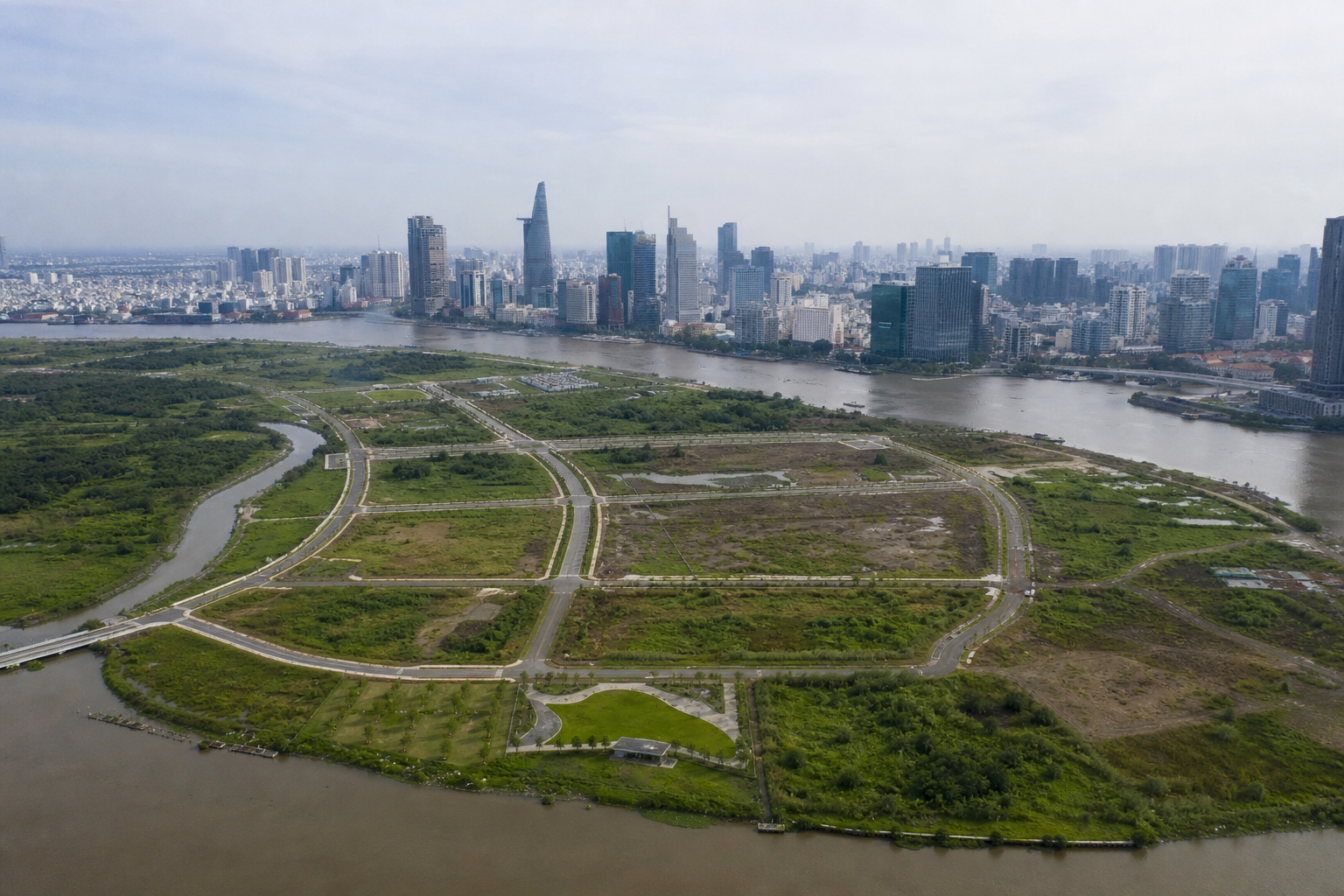
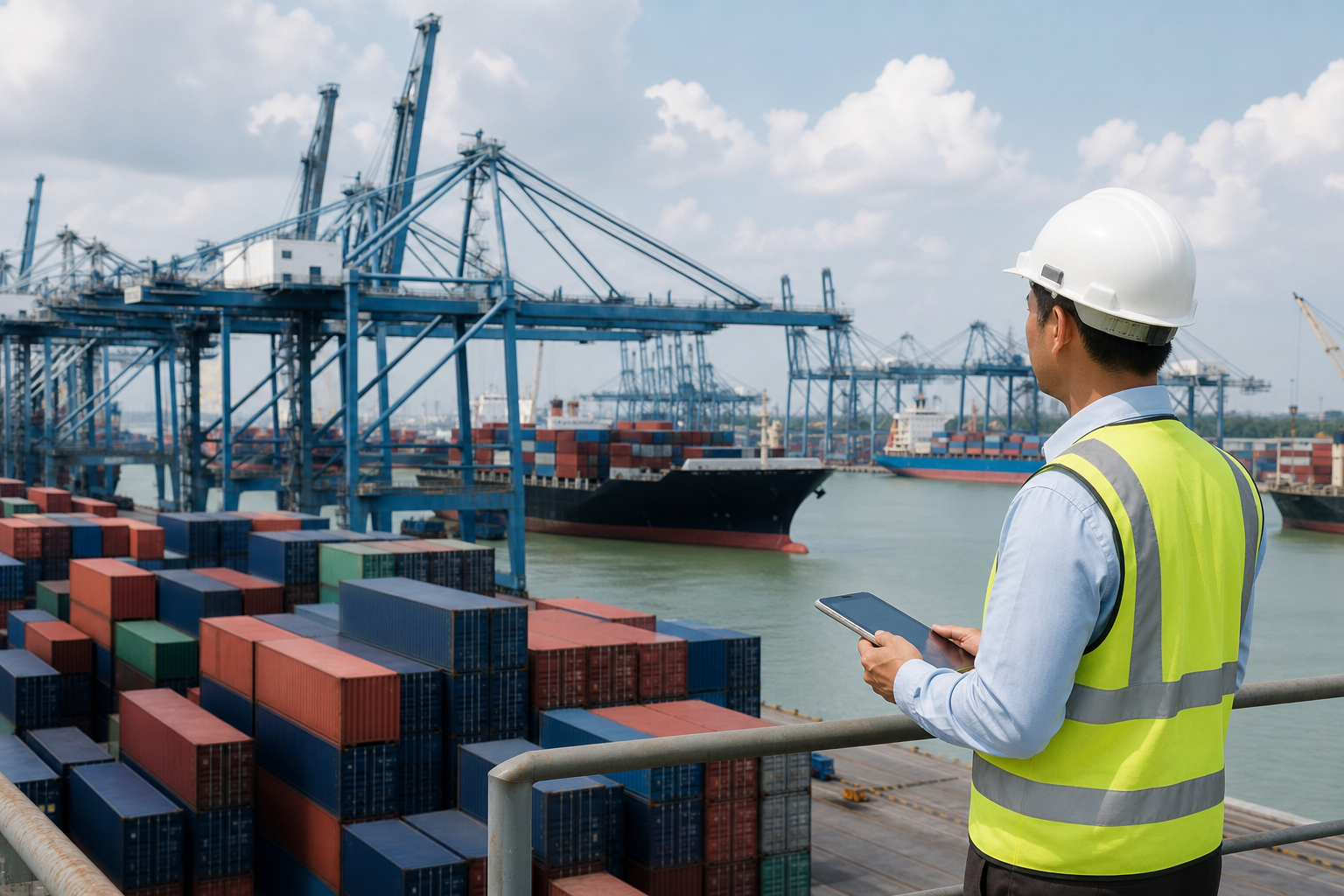
Ho Chi Minh City holds nearly 21,000 active foreign investment projects worth more than $143 billion, making it Vietnam's top FDI destination — yet city leaders are now openly declaring that model obsolete. In the first half of 2026, the city pulled in over $6.8 billion in fresh foreign capital, even as officials signal a deliberate pivot away from quantity toward technology depth and innovation capacity.
From Processing Zones to R&D Centres
The city's investment arc spans three decades. Tan Thuan Export Processing Zone, Vietnam's first, opened in 1991 and ushered in the initial wave of labour-intensive FDI. Saigon Hi-Tech Park followed in 2002, and a High-Tech Agricultural Park in 2004. Each step edged the city further from pure assembly toward higher-value activities. Today the trajectory points toward global R&D services, semiconductor design and AI — categories that did not register on Vietnam's economic map a generation ago.
Bosch's journey in Vietnam illustrates the shift clearly. The German engineering group arrived in 1994 with roughly 10 employees and now employs close to 6,000 people. More telling than headcount is the work: nearly 4,000 engineers in Vietnam contribute to automotive software, MEMS sensor design and semiconductor projects tied to Bosch's global supply chain. The company runs four R&D and innovation centres in the country, a footprint that reflects a bet on local engineering talent rather than cheap assembly labour.

Talent Over Tax Breaks
Intel, Samsung and Nidec have each chosen Ho Chi Minh City as their Southeast Asian manufacturing and R&D anchor, a pattern that suggests the city's competitive proposition has migrated from tax holidays and land costs toward workforce quality. The arrival in September 2025 of EmbedIT — the software arm of the Czech PPF Group — reinforces that reading. The firm opened its Southeast Asia development centre in the city and scaled from a small founding team to nearly 100 engineers within a year. It is targeting around 250 staff by 2027, focusing on lending platforms, AI infrastructure and cybersecurity for ASEAN markets.
EmbedIT's country manager cited Vietnam's young tech workforce, stable political environment and digital growth trajectory alongside competitive costs. The cost argument has not disappeared, but it now functions as one factor among several rather than the primary draw.
The Limits of the Old Model
Ho Chi Minh City's People's Committee chairman stated plainly at a recent policy conference that the traditional growth formula — low-cost labour, land concessions and tax incentives — has reached its ceiling. FDI already contributes roughly 20% of the city's gross regional domestic product and more than half of its exports, so the base is substantial. The strategic problem is that global supply chain competition now turns on institutional quality, business environment and innovation capacity, none of which are delivered by standard investment incentive packages.
The financing gap makes the urgency concrete. Vietnam needs an estimated $1.5–1.6 trillion in investment across 2026–2035, and the state budget can cover only about 20% of that. Ho Chi Minh City alone requires the equivalent of roughly 3.2 quadrillion VND for 2026–2030, with public funds supplying less than 40% of that total. Private and foreign capital must fill the remainder, which frames the city's next strategic move.

International Financial Centre as Catalyst
City planners are betting that an international financial centre — already branded VIFC-HCMC — can serve as the institutional architecture to attract global banks, asset managers and sovereign funds. The logic is that deep capital markets and credible financial governance standards will channel long-term money into infrastructure and technology at a scale that project-by-project FDI attraction cannot match.
Standard Chartered Vietnam's general director noted the framework would improve Vietnamese firms' access to international capital markets, not just attract inbound institutions. Associate Professor Nguyen Huu Huan, vice chairman of the VIFC-HCMC executive board, described the centre as a mechanism to "enhance competitiveness and mobilise capital for infrastructure and innovation." The financial centre concept is therefore positioned as an enabler of the broader innovation ecosystem rather than a standalone prestige project.
What Investors Should Watch
The strategy is coherent but carries execution risk. Building a credible international financial centre requires regulatory reforms, talent in finance and law, and governance standards that take years to establish. The engineering talent pipeline that attracted Bosch and EmbedIT exists today; the legal and financial infrastructure to support a regional capital hub does not yet exist at scale.
For global investors, the near-term signal is that Ho Chi Minh City is actively curating rather than simply courting FDI. Projects offering technology transfer, R&D activity and links to global value chains in electronics, semiconductors and software will receive preferential attention. The city's $143 billion FDI stock and its trajectory toward higher-value sectors make it one of Southeast Asia's more consequential investment destinations — but the rules of engagement are changing faster than many foreign investors may have registered.
Images: Pixabay