Torrential rains between July 15 and 17 triggered a catastrophic flash flood and landslides in Muong Than commune, Lai Chau province, destroying homes and infrastructure in Ban Chit village. On July 17, the Lai Chau provincial government declared a natural disaster emergency — one of the most serious such declarations in the region this year. Twenty-four families lost their homes entirely.
Scale of Destruction
The floodwaters receded to reveal thick layers of mud and debris blanketing floors, yards, and pathways throughout Ban Chit village. Mud had been sitting inside homes for three consecutive days before cleanup crews arrived, hardening against walls and floors. Even structurally intact houses on higher ground had their ground floors inundated. Livestock, furniture, and household goods were all swept up or submerged.

Boots on the Ground
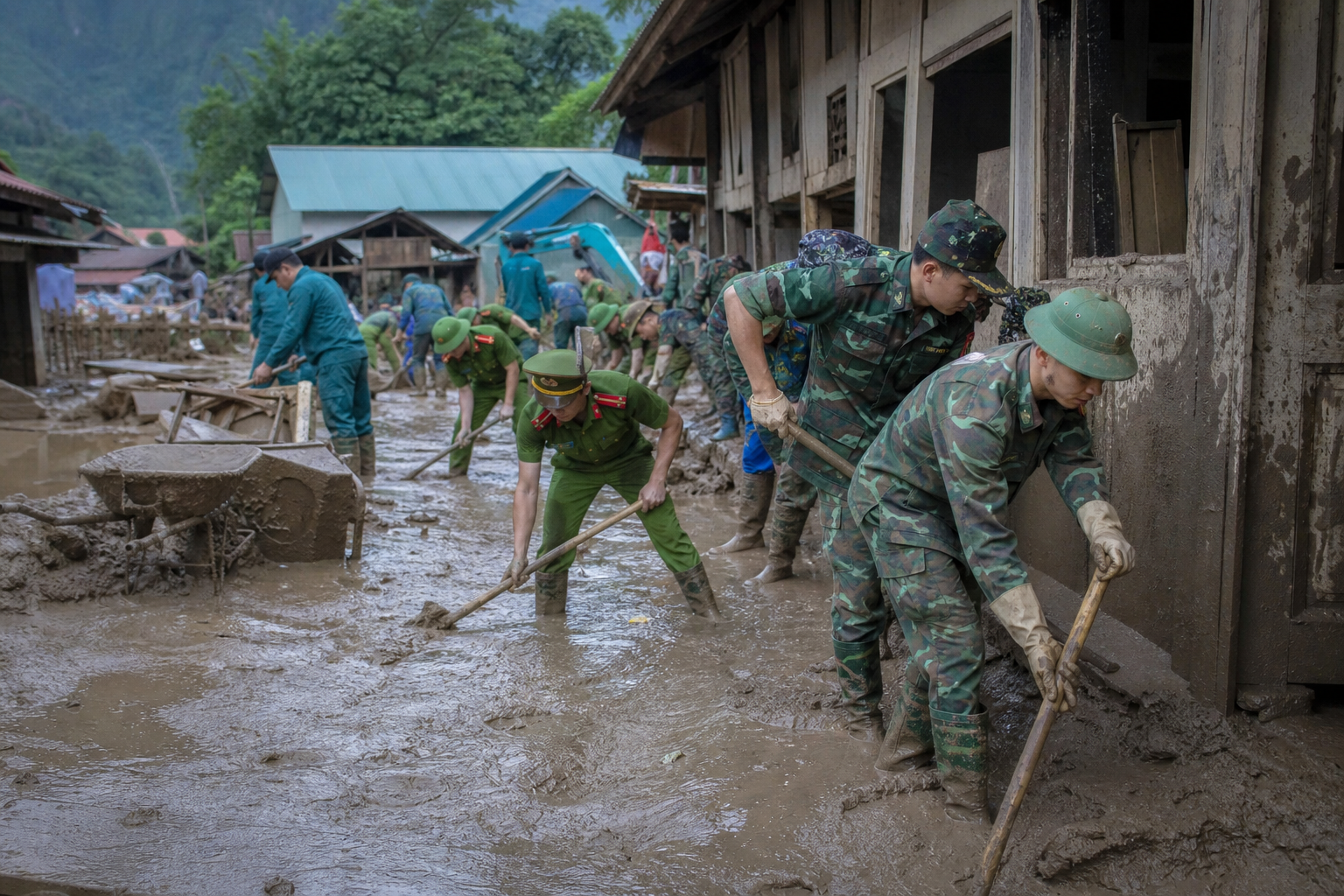
By July 19, more than ten excavators and roughly 40 specialized vehicles had been deployed to the affected area to search for victims and clear earth and timber debris. Dozens of military personnel and mobile police officers worked alongside each other, using shovels, hoes, and wooden boards to scrape and haul mud out of homes. Teams were assigned to the most heavily damaged houses first, with soldiers taking on different roles — digging, hauling, and salvaging usable belongings.
Recovery Under Difficult Conditions
Cleanup operations continued in poor weather, with rain still falling and roads remaining muddy and difficult to navigate. Officers carried furniture and appliances outside, washed them down, and set them to dry so families could reuse what remained. Rescue teams also moved livestock to safety. Volunteers from other provinces arrived with essential supplies and joined the manual cleanup effort, while power company workers raced to restore electricity to the commune.
Emergency Resettlement Plan
Lai Chau provincial authorities moved quickly beyond immediate relief. On July 19, the provincial People's Committee issued an emergency construction order for a new resettlement zone budgeted at approximately 19 billion Vietnamese dong (around $740,000). The planned site covers roughly 10,000 square meters and will include Type IV residential houses — a basic but permanent construction standard — along with internal roads, water supply and drainage systems, electricity, and land grading. The 24 households that lost their homes will be relocated there once construction is complete.

Community Resilience
For many families in Ban Chit, the arrival of uniformed personnel marked a turning point from paralysis to action. Residents who had been unsure where to begin found a rhythm working alongside soldiers and officers. Street by street and house by house, passageways were cleared and living spaces were made habitable again. The combined effort of the military, police, volunteers, and local residents gave the recovery a pace it could not have achieved otherwise.
The Ban Chit flood is a reminder of how quickly extreme weather can overwhelm isolated mountain communities in northern Vietnam — and how dependent those communities are on state emergency response capacity. With a formal disaster declaration in place and resettlement funding already allocated, the focus now shifts from immediate rescue to durable reconstruction. The speed of the provincial government's resettlement order suggests that lessons from earlier flash flood disasters elsewhere in the north have shaped a faster institutional response.